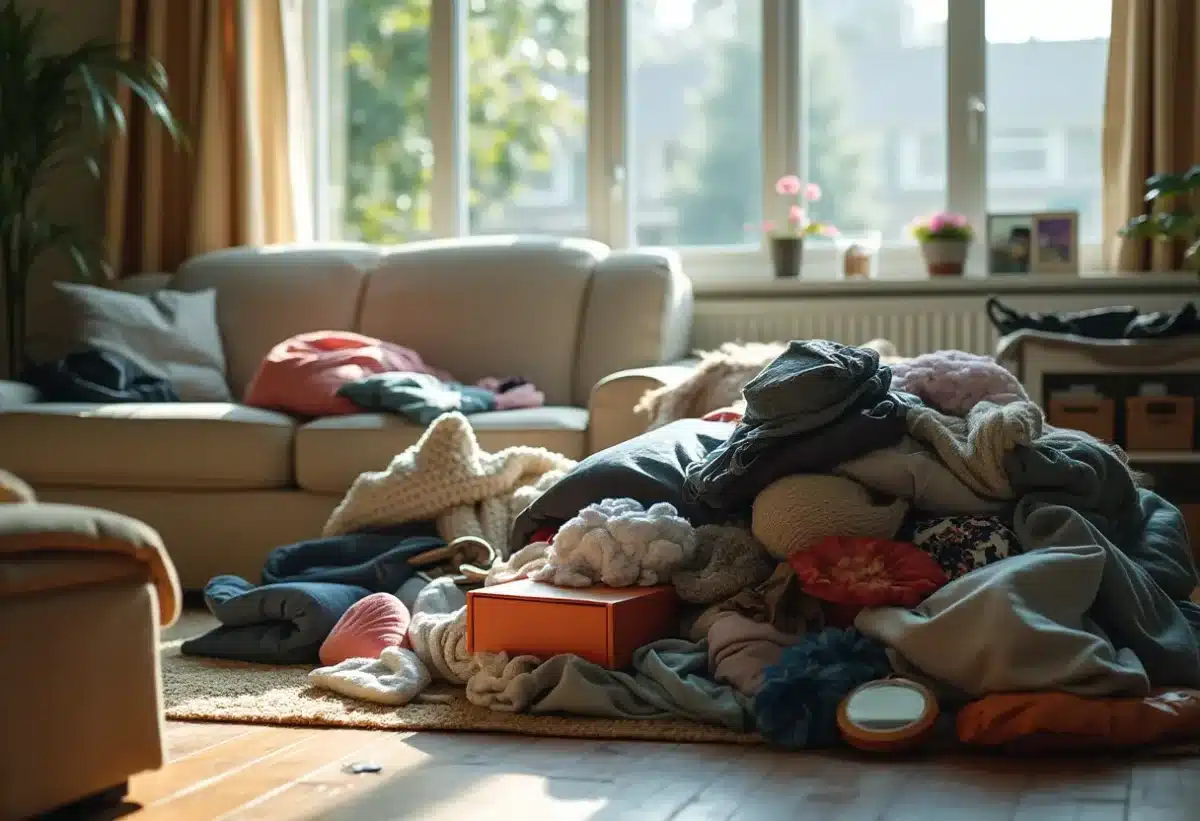
Bulky items often accumulate without us really noticing. Between old furniture, broken appliances, and outdated clothing, it’s easy to feel overwhelmed. The fundamental question then becomes: how to manage this accumulation without harming the environment or compromising one’s comfort of living?
Several options are available for those looking to do a major clean-up. Donating to charitable organizations, selling online, or recycling are all solutions to consider. Each has its advantages and disadvantages, and the choice will depend on the nature of the items to be disposed of and individual values.
Why and how to declutter
Decluttering the home is a practice that is gaining popularity, particularly thanks to iconic figures like Marie Kondo. Her method of the great tidying-up suggests keeping only the items that spark joy. This approach goes beyond mere organization; it touches on quality of life and well-being.
Decluttering has numerous benefits for the home. A tidy home free of unnecessary items is more pleasant to live in, easier to maintain, and offers a space conducive to relaxation. Aurélie and Youri, two minimalism enthusiasts, testify to the positive effects they experienced after decluttering their home together. Their experience confirms that getting rid of bulky items can transform the atmosphere of a household.
For those unsure of where to start, several options exist:
- Hire a company to help you clear your home: professionals can take care of sorting, removing, and recycling bulky items.
- Donate to charitable organizations: a way to do a good deed while getting rid of unnecessary items.
- Sell online: this allows you to recover part of the value of the items.
- Recycle: for items that cannot be reused, recycling is an eco-friendly solution.
Marie Kondo, for example, favors a methodical and emotional approach, asking each person to reflect on the usefulness and joy provided by each item. Consider these different methods to successfully declutter and transform your home into a harmonious and functional space.
The different options for getting rid of bulky items
Approaching decluttering requires knowing the various solutions available, depending on individual needs and local constraints. Here are some effective options for getting rid of bulky items.
Municipal services
The town hall regularly organizes bulky item collection days. These collections allow you to dispose of large items without having to travel to a waste disposal site. Check with your town hall for the dates and details of these collections.
Charitable organizations
Many organizations accept donations of items in good condition. This allows you to give your belongings a second life while supporting a social cause. Notable organizations include Emmaüs and the Red Cross, which are distinguished by their ability to collect and redistribute items.
Recycling and waste disposal sites
For non-reusable items, recycling is an eco-friendly solution. Most municipalities have waste disposal sites where you can drop off your bulky items. They generally accept green waste, rubble, metals, and appliances.
Online selling
Selling items on online platforms like Le Bon Coin or Vinted can be a solution to recover some of the value of your belongings. This option is ideal for items in good condition, such as furniture, clothing, or electronics.
Consider these different methods for effective and environmentally friendly decluttering. Each option has specific advantages, to be adapted according to your needs and situation.
Practical tips for effective sorting
Plan your decluttering
Clearing your home of unnecessary items requires rigorous organization. Start by making a list of the rooms to declutter and set a schedule. A detailed plan will help you stay motivated and avoid procrastination.
Use Marie Kondo’s method
The famous method of Marie Kondo, known as the great tidying-up technique, suggests sorting by category of items rather than by room. This approach allows you to better assess the quantity of similar items you own and to keep only those that spark joy.
Create categories
For optimal sorting, divide your items into four categories: recycling, donation, sale, and waste. This will facilitate the decision-making process and ensure that each item finds its place.
- Recycling: for recyclable materials such as paper, plastic, and glass.
- Donation: for items in good condition that you no longer use.
- Sale: for valuable items you wish to monetize.
- Waste: for broken or unusable items.
Hire professionals
For bulky items or complex situations, don’t hesitate to call on companies specialized in home clearance. These professionals have the expertise and resources necessary to effectively manage the volume of clutter.
Follow inspiring examples
Testimonials like that of Aurélie and Youri, who decluttered their home together, show that sorting can also be a collaborative and enriching activity, strengthening bonds while transforming the living space.
By applying these practical tips, you will implement effective and sustainable decluttering, contributing to a healthier and more organized environment.