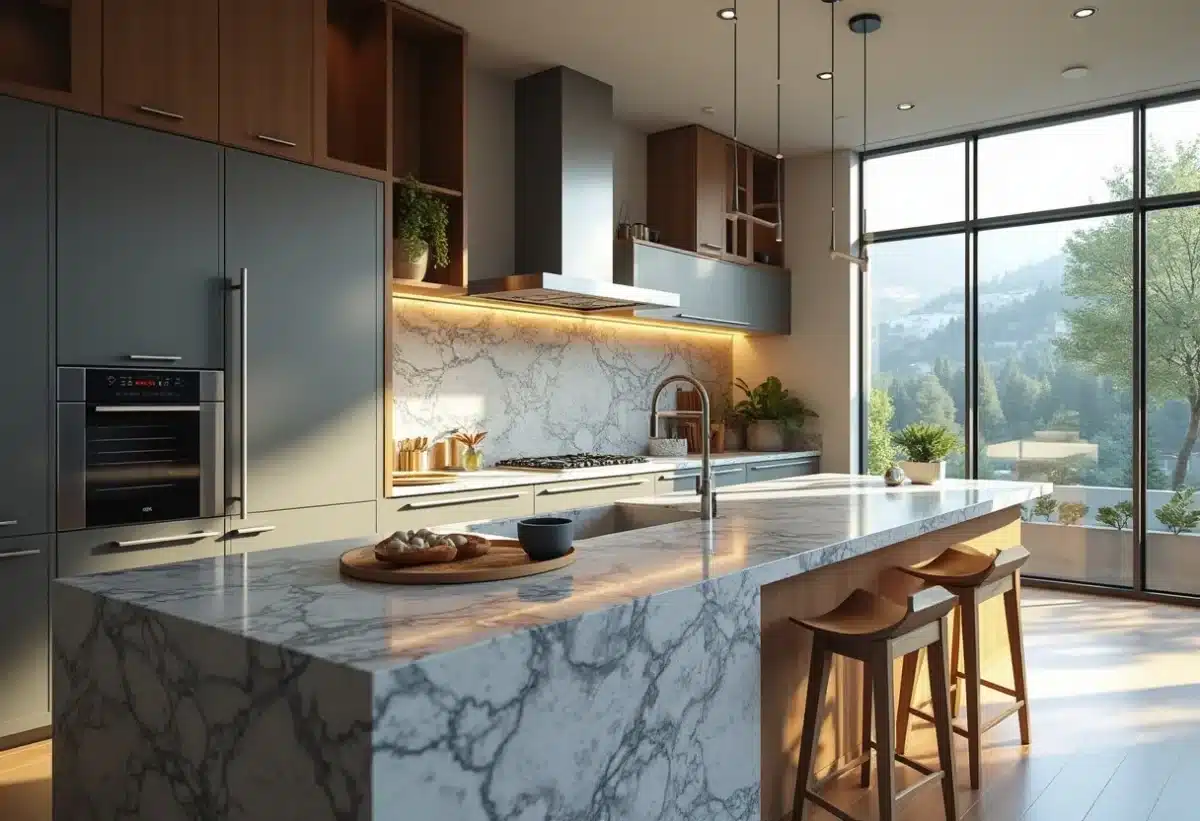
Designing a functional kitchen starts with the careful selection of the countertop. It should combine aesthetics, durability, and practicality. A well-chosen countertop not only facilitates meal preparation but also contributes to the harmony of the space.
Materials play a fundamental role. Granite, for example, offers exceptional resistance to impacts and heat, while wood adds a warm and natural touch. Don’t forget to consider ease of maintenance and compatibility with your cooking habits to optimize your workspace.
Define Your Needs and Cooking Habits
To design a functional kitchen, start by analyzing your needs and habits. The concept of the activity triangle is central. It includes the preparation and cooking area, the washing area, and the cold zone. Optimize your movements by adhering to this principle.
Depending on the available space and your preferences, you can choose from different types of kitchens:
- Linear Kitchen: ideal for small spaces, it allows for smooth circulation.
- Parallel Kitchen: facilitates storage and offers a large capacity.
- L-Shaped Kitchen: easy to design and very practical for medium-sized spaces.
- U-Shaped Kitchen: perfect for large spaces, it maximizes work surfaces.
- Island Kitchen: suitable for spacious dining areas, adding a friendly dimension.
In addition to the layout, the choice of kitchen elements is crucial. Built-in appliances optimize space, and lighting provides essential comfort for meal preparation. Once your needs are defined, make sure you have chosen a suitable countertop. Consider the materials: granite for its durability, wood for its natural charm. Each material has its advantages. Take into account ease of maintenance and resistance to impacts and heat.
Understanding the Different Types of Kitchen Countertops
The selection of the countertop is a fundamental step in designing your kitchen. Several materials are available, each with specific properties, catering to varied needs in terms of functionality and aesthetics.
- Ceramic: this material stands out for its robustness and ease of maintenance. It is resistant to scratches, stains, and heat, making it a popular choice for those seeking durability and simplicity.
- Dekton: this ultra-compact surface offers exceptional resistance to impacts, scratches, and high temperatures. Its low porosity prevents liquid absorption, ensuring optimal hygiene.
- Laminate: often praised for its value for money, laminate mimics various materials such as wood or stone. It is easy to clean and available in a wide range of finishes and colors, allowing for great design flexibility.
| Material | Advantages |
|---|---|
| Ceramic | Easy to maintain, resistant to scratches and heat |
| Dekton | Highly resistant, low porosity, hygienic |
| Laminate | Mimics other materials, economical, easy to clean |
Keep in mind that the choice of countertop should harmonize with the rest of your kitchen. A well-chosen surface can transform your preparation area into a space that is both aesthetic and practical.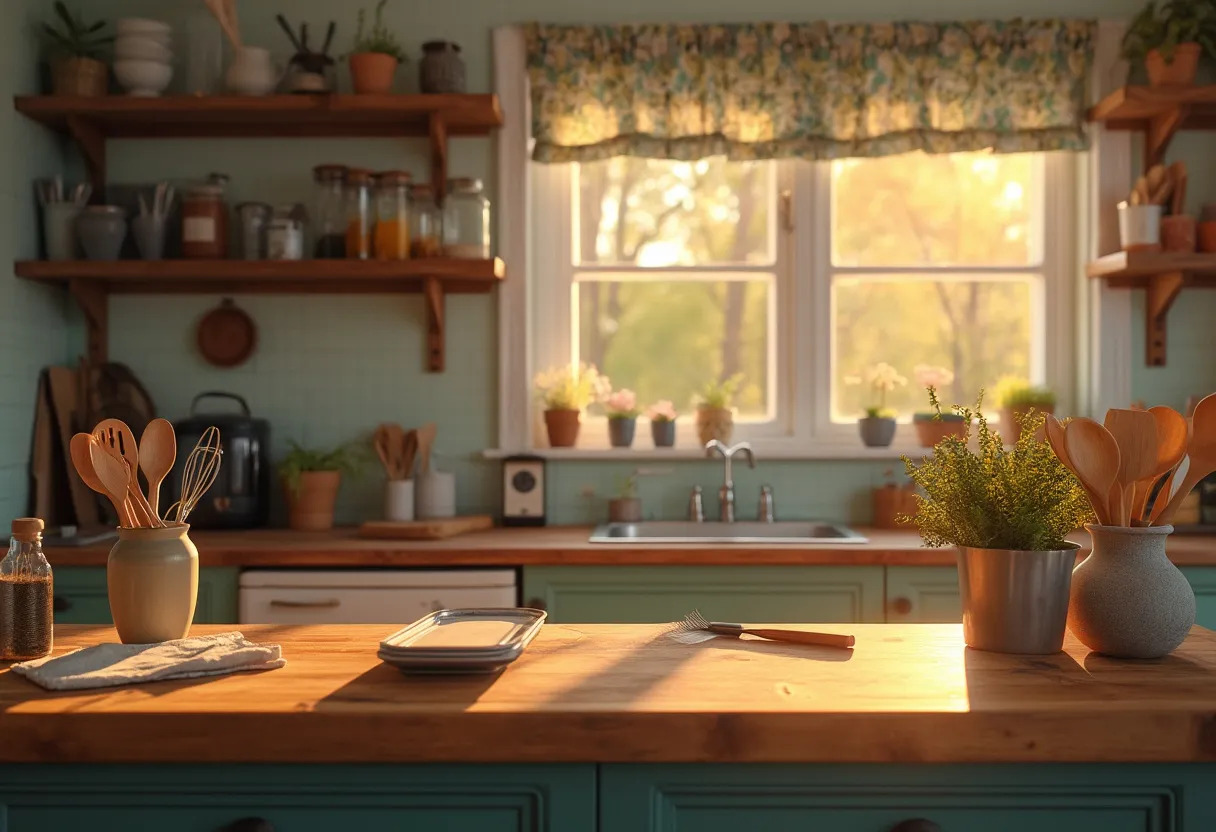
Criteria to Consider for Choosing a Durable Countertop
Defining your needs is essential before choosing a countertop. Consider your cooking habits: do you often prepare complex meals or do you opt for quick preparations? This question will determine the resistance and maintenance required for the chosen material.
The Most Durable Materials
- Granite: resistant to impacts, scratches, and heat. This natural material combines robustness and elegance.
- Quartz: made of resin and quartz, it offers a non-porous surface, easy to clean and highly resistant to stains.
- Stainless Steel: used in professional kitchens, it is indestructible and hygienic, although it is sensitive to scratches.
Layout Factors
The choice of a countertop should also fit harmoniously into the activity triangle of your kitchen, including the preparation, cooking, and washing areas. By optimizing these zones, you reduce unnecessary movements and improve efficiency.
Types of Kitchens and Integration
The configuration of your kitchen also influences the choice of countertop. A linear kitchen or parallel kitchen, suitable for small spaces, will require an easy-to-maintain material. For an L-shaped or U-shaped kitchen, often more spacious, choose aesthetic materials that highlight the breadth of the space. The island kitchen is well-suited for countertops made of more noble materials, such as solid wood, for a friendly and warm effect.
Proper lighting is also essential to highlight your countertop while providing comfort. The integration of built-in appliances can optimize space and offer a modern and sleek finish to your kitchen.