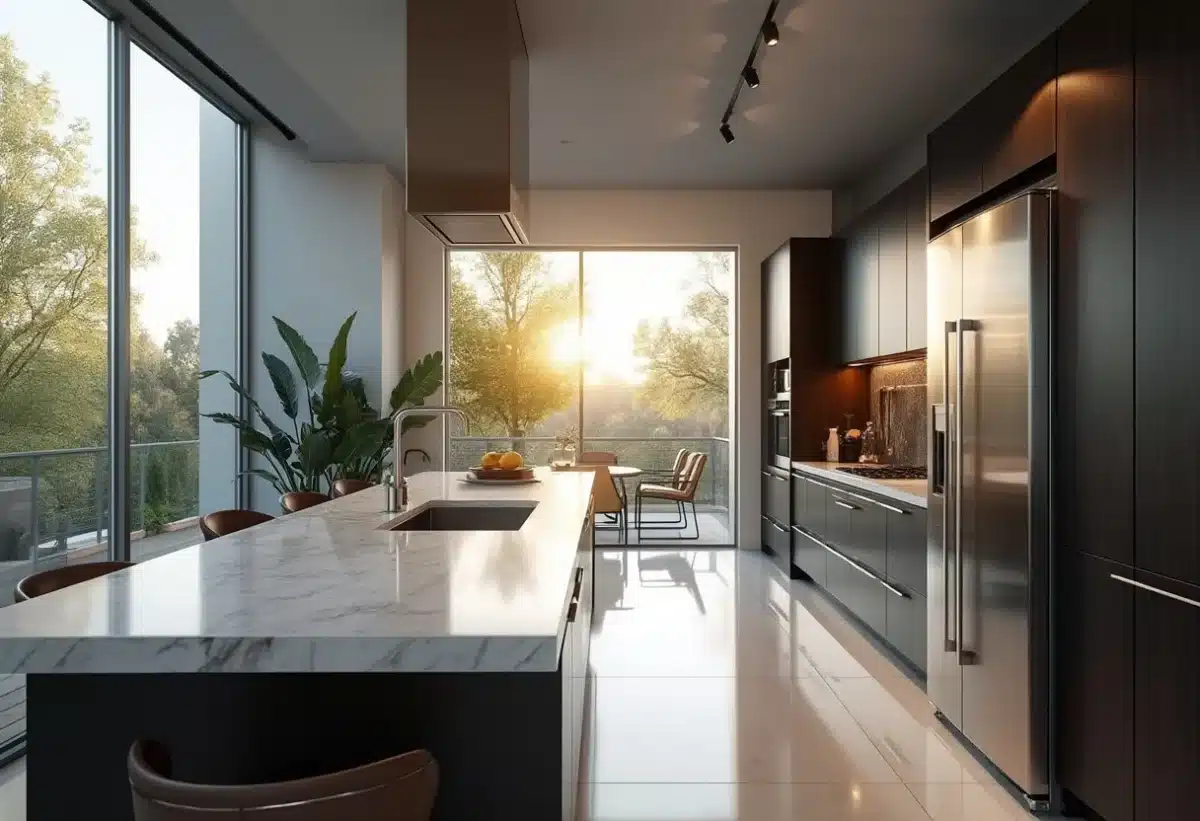
Imagining the perfect kitchen often starts with the choice of countertop. As a central element, it must combine aesthetics and functionality. Whether you are passionate about cooking or simply want a welcoming space, the material and configuration play a fundamental role.
Between warm wood, durable quartz, and modern stainless steel, the options are numerous. Each type of material has its advantages and disadvantages, influencing not only the appearance of your kitchen but also its durability and maintenance. Making an informed choice will create a space that is both practical and inviting.
The essential criteria for choosing your countertop
Every kitchen deserves a countertop suited to its specifics. To make the right choice, follow these tips and evaluate the following criteria:
The material
The material determines both the aesthetics and functionality of your countertop. Here are some popular options:
- Laminate: Resistant to impacts, scratches, heat, and moisture, easy to maintain, and affordable (10 to 30 euros per m²).
- Wood: Adds a warm touch, requires regular maintenance, and has a lifespan of 10 years. Available in beech, bamboo, teak, and oak.
- Quartz: Stain, scratch, and impact-resistant, easy to maintain, but supports a maximum temperature of 150°.
- Stainless Steel: Heat and detergent resistant, easy to maintain, but marks and scratches are visible.
- Marble: Very aesthetic, but expensive (300 to 600 euros per m²) and sensitive to acids despite its resistance to impacts and heat.
Durability
Your countertop must withstand the demands of the kitchen. Durability and resistance to impacts, scratches, heat, and chemicals should be considered. For example, granite offers exceptional resistance to high temperatures, scratches, and impacts.
Maintenance
Consider the ease of maintenance to ensure optimal hygiene. Laminate and quartz require little maintenance, unlike wood, which needs regular treatments. Stainless steel, while easy to clean, requires special attention to avoid marks.
Take these criteria into account to choose a countertop that meets your needs and integrates harmoniously into your kitchen.
The different materials available and their advantages
To choose the ideal material for your countertop, several options are available. Each has specific characteristics that meet varied needs. Here’s an overview of the available materials and their advantages:
Laminate
- Resistance: impacts, scratches, heat, grease, and moisture
- Maintenance: easy
- Price: 10 to 30 euros per m²
- Lifespan: 20 to 30 years
Wood
- Types: beech, bamboo, teak, oak
- Maintenance: requires regular treatment
- Lifespan: 10 years
Quartz
- Resistance: stains, scratches, impacts
- Maintenance: easy
- Maximum temperature: 150°
Stainless Steel
- Resistance: heat, detergents
- Maintenance: easy
- Weak points: visible marks, scratches
Marble
- Price: 300 to 600 euros per m²
- Resistance: acids, cleaning products, heat, impacts
- Alternative: ceramic with a marble effect
Each material has specific strengths. Consider the requirements of your kitchen to make an informed choice.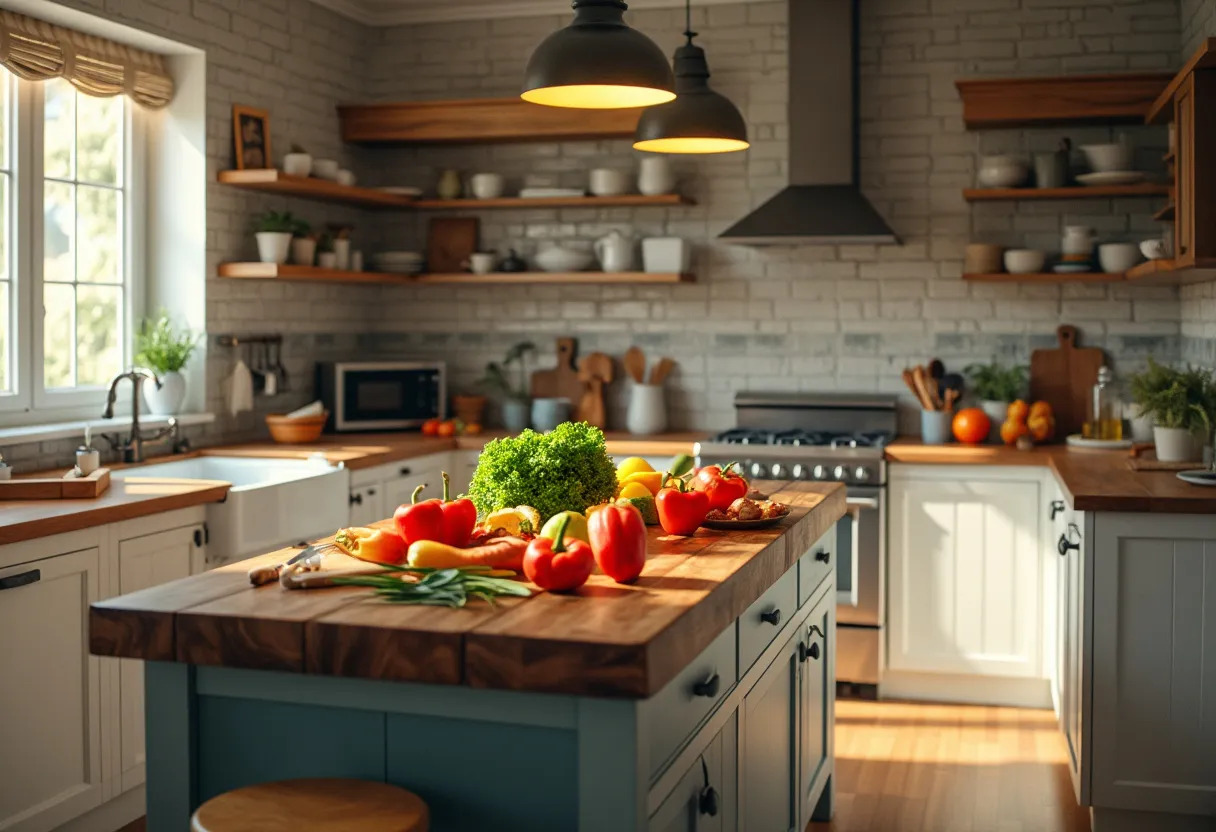
Adapting the countertop to the style and ergonomics of your kitchen
Style and aesthetics
To harmonize your countertop with the overall design of your kitchen, consider these criteria:
- Color: Match the countertop to the elements of your kitchen, such as furniture and coverings.
- Texture: Choose a finish that complements other surfaces, whether matte, glossy, or textured.
- Material: Opt for a material that reflects the desired style: a wooden countertop for a warm atmosphere, stainless steel for a contemporary look, or marble for a touch of elegance.
Ergonomics and functionality
The ergonomics of your countertop directly influence your comfort and efficiency in the kitchen. Here are some points to consider:
- Height: Adjust the height of the countertop to your size to avoid lower back pain. The standard height is between 85 and 95 cm.
- Depth: Ensure that the depth of the countertop allows for the integration of necessary equipment (sink, cooktop) while leaving enough space to work. A depth of 60 to 65 cm is recommended.
- Layout: Organize the cooking, washing, and preparation areas to minimize movement and optimize workflow. A triangular layout is often preferred.
Resistance and durability
To ensure the longevity of your countertop, prioritize materials that are resistant to impacts, scratches, and high temperatures. Granite, quartz, and ceramic are durable options that meet these requirements. Also consider the maintenance needed for each material to preserve its appearance and functionality.