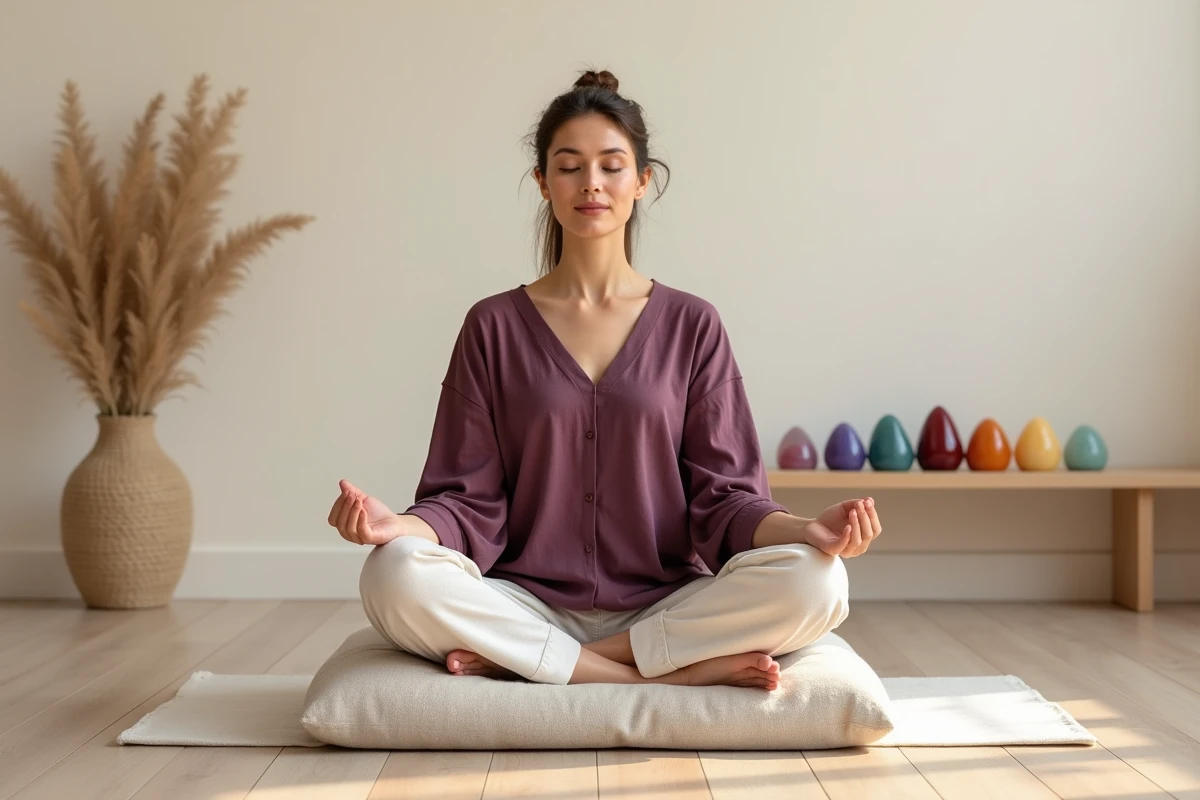
When choosing a stone for a bracelet or preparing for a meditation session, the first question that often arises is about color. Red for grounding, green for the heart, purple for the crown: these associations are not decorative. They refer to the seven chakras, these energy centers described by Hindu tradition, ranging from the base of the spine to the top of the head.
Understanding the colors of the chakras provides a framework for identifying where energy flows well and where it gets blocked.
Chakra Colors and Wavelength: Why Each Hue Matters
The colors of the chakras are often associated with spiritual symbolism, but there is an interesting parallel with the physics of light. Each color corresponds to a specific wavelength, from red (the longest) to violet (the shortest). The chakra system follows exactly this progression: red is at the bottom of the body, violet at the top.
This correspondence is not a coincidence in Ayurvedic tradition. The lower chakras, associated with warm colors, relate to physical and instinctual needs. The upper chakras, associated with cool colors, touch on consciousness and intuition. It is this spectral logic that structures the entire system.
To delve deeper into the meaning of chakra colors, one can look at the foundational texts of Ayurvedic medicine, which detail the vibrations specific to each center.
One point to keep in mind: color psychology, as a field of research, deals with emotional and attentional responses to colors in specific contexts. It does not validate the chakra system as a medical model. The two approaches coexist without overlapping.
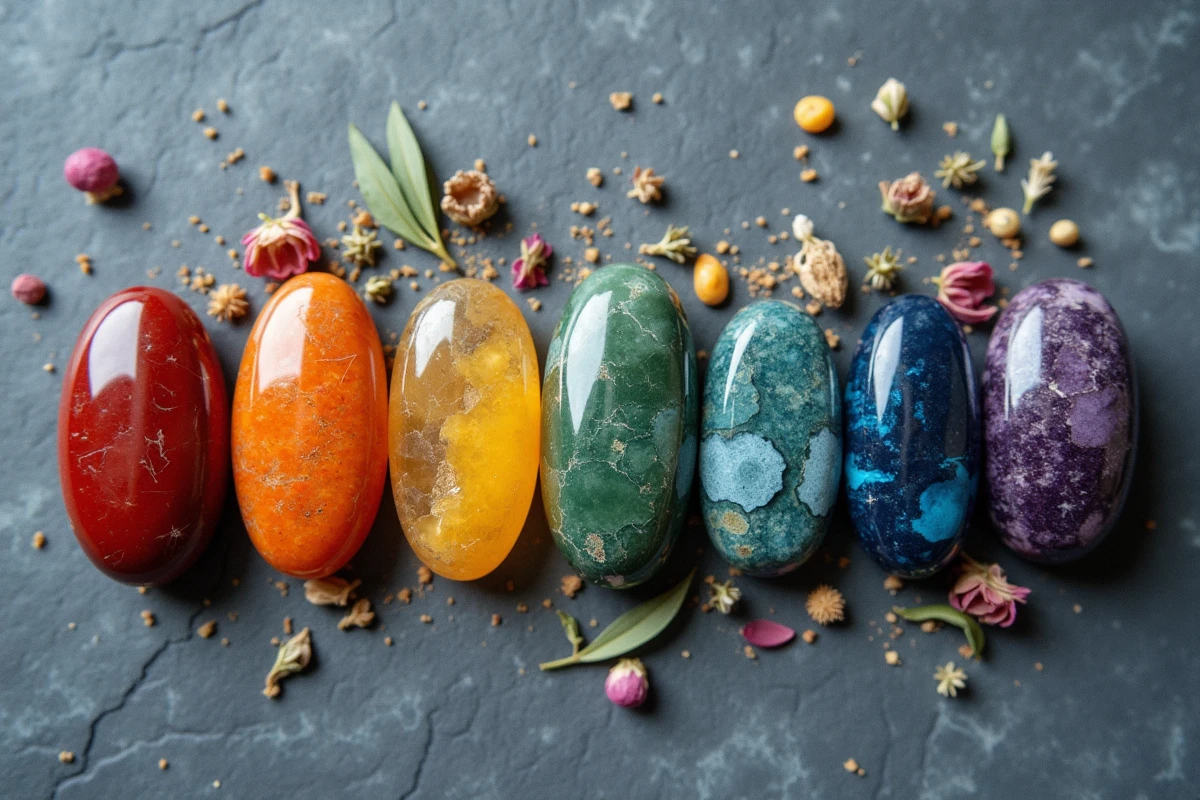
Three Lower Body Chakras: Red, Orange, Yellow, and Physical Grounding
In practice, when one feels a lack of energy or a sensation of floating, one first works on the three lower chakras. These are the ones that manage grounding, creativity, and confidence.
Root Chakra and Red Color
Located at the base of the spine, the root chakra (Muladhara) is associated with red. It concerns security, stability, and the connection to the physical body. An imbalance at this level often manifests as diffuse anxiety or persistent fatigue.
To stimulate it, concrete techniques are used: walking barefoot on grass, visualizing red light at the base of the back, wearing red stones like jasper or garnet.
Sacral Chakra and Orange Color
The sacral chakra (Svadhisthana), located below the navel, vibrates at the frequency of orange. It is the center of creativity, pleasure, and emotional fluidity. When this chakra is blocked, one often observes a loss of motivation or rigidity in relationships with others.
Solar Plexus Chakra and Yellow Color
The yellow of the solar plexus governs self-confidence and willpower. Located between the navel and the sternum, Manipura acts as a decision-making center. People who feel constantly indecisive or dominated in their relationships would benefit from paying attention to this energy center.
Cool Colors of the Upper Chakras: Green, Blue, Indigo, and Violet
The four upper chakras transition from physical needs to relational, expressive, and spiritual dimensions. The transition occurs at the heart level.
Heart Chakra and Green Color
Anahata, the heart chakra, is associated with green. It bridges the lower body (material) and the upper (spiritual). An imbalance here translates into difficulties in giving or receiving affection, sometimes accompanied by chest pain without an identified medical cause.
The green of the heart chakra represents the ability to love unconditionally, including towards oneself. In meditation, one visualizes an emerald light at the center of the chest.
Throat Chakra and Light Blue
Vishuddha, the throat chakra, vibrates in light blue. It governs communication and authentic expression. When one holds back words or feels recurrent tension in the neck, it is often this chakra that needs attention.
Third Eye Chakra and Indigo
Ajna, located between the eyebrows, is associated with indigo. It is the center of intuition and expanded consciousness. Working on this chakra involves visualization exercises or meditation focused on the point between the eyes.
Crown Chakra and Violet
Sahasrara, at the top of the head, is associated with violet (sometimes white). This chakra connects the individual to a dimension that transcends the physical body. It is not activated by will but rather through a gradual letting go.
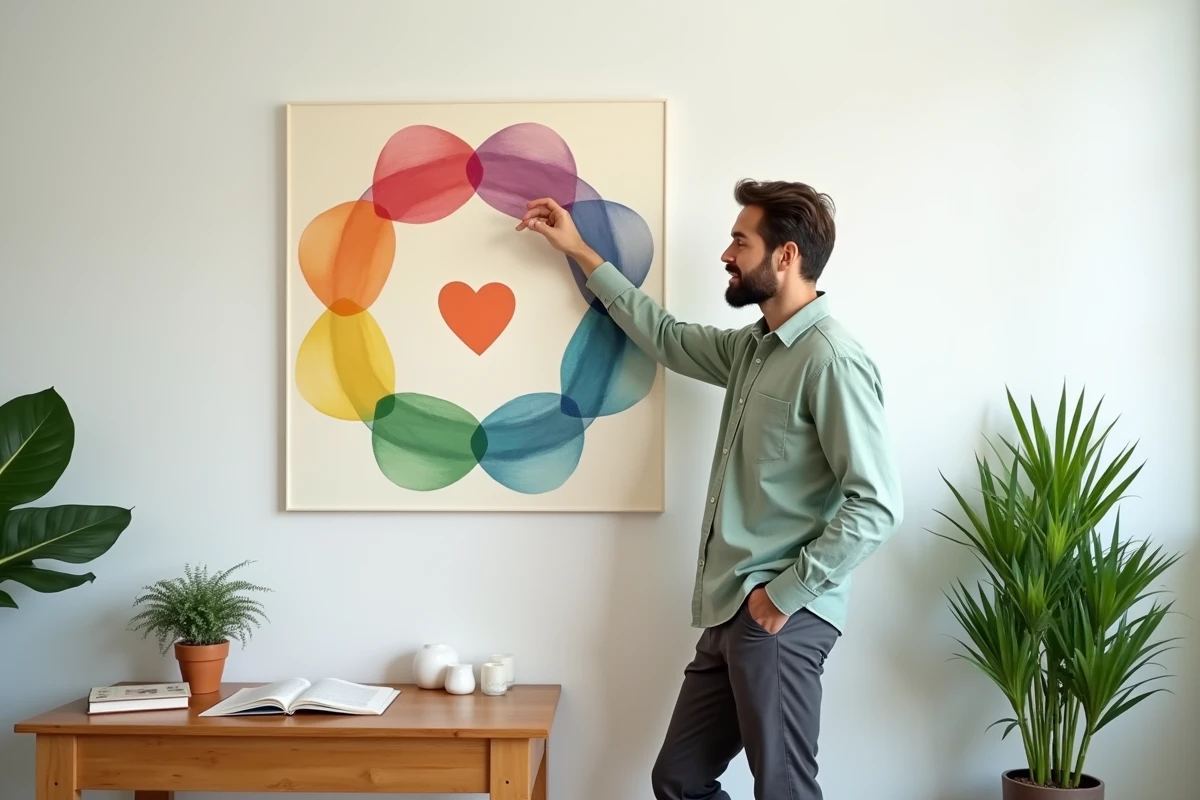
Using Chakra Colors in Daily Life: Practical Practices
The discourse on chakras becomes more relevant when moving from theory to practical use. Recent content on the subject emphasizes practical rituals more than just a simple correspondence table. Here are some actionable ideas for daily use:
- Choose the color of your clothing based on the chakra to stimulate (wear blue before speaking, red before physical effort)
- Adapt your diet: red foods (tomatoes, beets) for the root chakra, green foods (spinach, avocado) for the heart chakra
- Select a natural stone by intention rather than aesthetics (amethyst for the third eye, citrine for the solar plexus)
- Keep a visualization journal noting the colors that appear spontaneously during meditation
Responses vary on this point: some people feel effects from the first sessions of colored visualization, while others need several weeks of regular practice.
Balancing Your Chakras: Identifying an Energetic Imbalance by Color
An imbalance does not always manifest as localized pain. It can be detected through indirect signals. A sudden and repeated attraction to a specific color may indicate a need at the corresponding chakra level. Conversely, a marked aversion to a color sometimes signals a blockage in the associated energy center.
In meditation, observing which area of the body seems “dim” or difficult to visualize helps locate the imbalance. Working on the colors of the chakras then becomes a personal diagnostic tool, even before choosing a rebalancing technique (meditation, yoga, wearing stones).
The most reliable approach remains to observe your reactions over several days rather than drawing conclusions after a single session. The chakra system is not a medical diagnosis but a complementary framework that helps to better listen to one’s body and emotions.