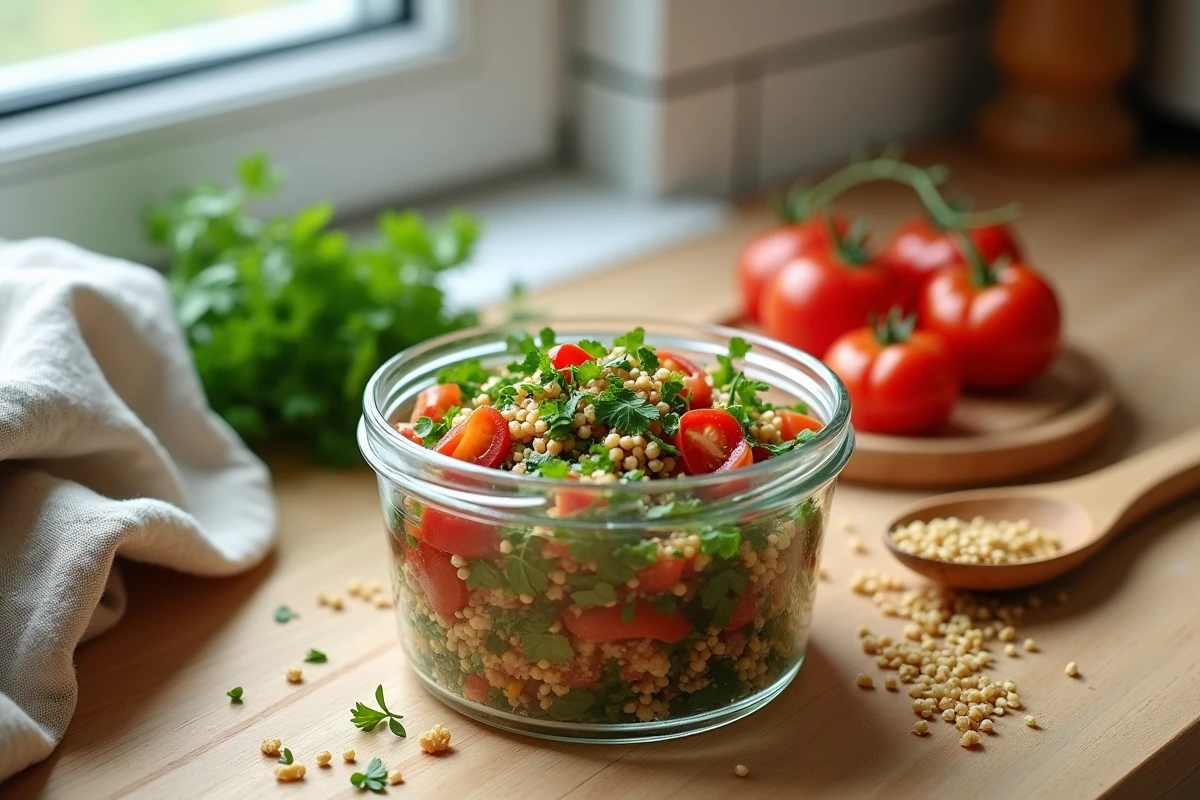
You prepared a large bowl of tabbouleh for a barbecue, and half of it is left. The instinct would be to just put it in the freezer as is. The problem is that tabbouleh contains ingredients that react very differently to the cold. Understanding these reactions helps avoid unpleasant surprises when tasting.
Why the texture of tabbouleh changes after freezing
Tabbouleh mixes two families of ingredients with opposing behaviors when faced with freezing. On one side, there’s the semolina or bulgur: grains that handle freezing well. On the other, the raw vegetables and fresh herbs, which are full of water.
When the water contained in a tomato freezes, it forms crystals that puncture the cell walls of the fruit. Upon thawing, the tomato releases its juice and becomes soft, almost mushy. The same phenomenon affects cucumber, mint, and parsley. Fresh herbs lose their structure and crunch after being frozen.
The semolina, on the other hand, absorbs this excess liquid. The result: thawed tabbouleh often becomes mushy, with softened vegetable pieces drowned in soggy grains. This is not a food safety issue, but a matter of enjoyment.
Tabbouleh with bulgur or semolina: which freezes better
You may have noticed that some tabbouleh holds up better than others after a night in the refrigerator? This resistance over time gives a good indication of how it will behave in the freezer.
Bulgur, used in Lebanese tabbouleh, is precooked cracked wheat. Its structure remains firmer than fine semolina after rehydration. Bulgur retains its texture better after thawing than semolina. Couscous semolina, being more porous, absorbs more liquid and softens faster.
Traditional Lebanese tabbouleh mainly contains parsley, tomato, and very little grain. Despite the fragility of the herbs, it’s the small volume of bulgur that freezes best in this recipe. The trick is to separate the components before freezing. To learn how to freeze homemade or store-bought tabbouleh and succeed at each step, a dedicated guide details the procedure.
Freezing method by separating ingredients
The best approach to preserve the flavor and texture of tabbouleh is based on a simple principle: freeze the grains separately from the fresh elements. Here are the concrete steps.
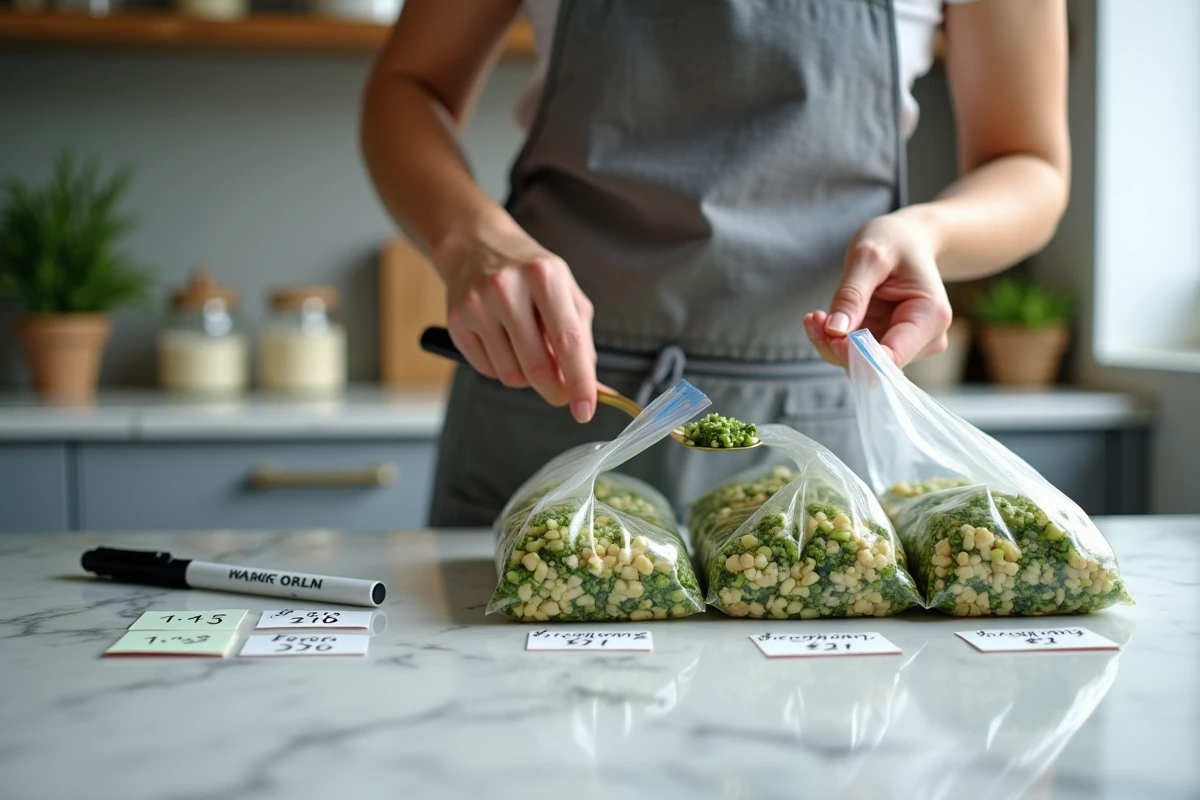
- Prepare your seasoned semolina or bulgur (olive oil, lemon juice, salt) without mixing in the vegetables or herbs. Allow it to cool completely before distributing it into individual portions in freezer bags or airtight containers.
- Remove as much air as possible from the containers. Air causes frost, and frost alters the taste of the grains over time.
- Label each portion with the date. Semolina or bulgur can be stored in the freezer for a few weeks without significant loss of quality.
- When ready to serve, thaw the grains in the refrigerator the night before, then add the fresh tomatoes, parsley, mint, and cucumber cut at the last moment.
This method requires a bit more organization, but it yields a result that is incomparably better than a complete tabbouleh frozen.
And if the tabbouleh is already mixed
When the leftovers are already assembled, freezing is still possible. The taste will generally be preserved, but expect a different texture. The diced tomatoes will turn to mush, and the parsley will lose its fresh appearance.
A tip to limit the damage: drain the excess dressing or lemon juice before freezing. The less free liquid there is, the less spongy the grains will become upon thawing. After thawing in the refrigerator, a drizzle of fresh lemon juice and a splash of olive oil will bring back some zest to the whole.
Freezing store-bought tabbouleh: the limits to know
Commercial tabbouleh trays pose an additional problem. They often contain preservatives, thickeners, and seasoning calibrated for cold consumption, not for a freeze-thaw cycle.
The main risk is not a health one. It’s the accelerated degradation of texture. The additives that maintain consistency in the tray react poorly to freezing. The sauce becomes watery, the semolina sticks together, and the small pieces of pepper or olive lose all firmness.
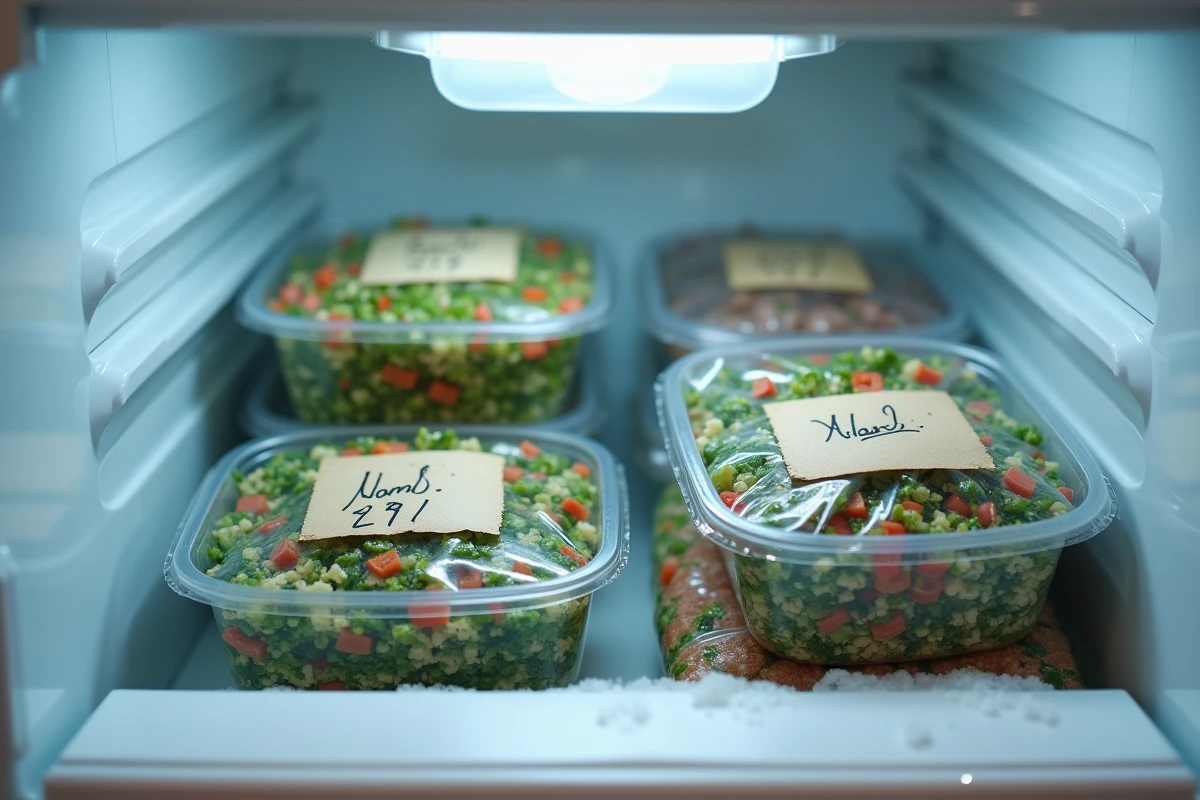
If you want to freeze store-bought tabbouleh, first transfer it to a suitable airtight container for the freezer. The original tray is generally not designed to withstand freezing. Homemade tabbouleh always freezes better than store-bought tabbouleh, because you control every ingredient and the timing of assembly.
Thawing tabbouleh: the only reliable method
Thawing is as crucial as freezing because too rapid a warming amplifies the release of water from the vegetables and herbs.
- Thawing in the refrigerator for several hours or an entire night is the safest method. It allows for a slow and even temperature rise.
- The microwave should be absolutely avoided. It heats unevenly and turns the semolina into mush in some places.
- Thawing at room temperature is risky from a bacterial standpoint, especially in summer. Tabbouleh contains moist ingredients that promote microbial growth at warm temperatures.
Take the tabbouleh out of the freezer the night before and place it in the refrigerator. Before serving, taste and readjust the seasoning: the cold dulls the perception of salt and acidity. A little lemon juice, a few chopped mint leaves added at the last moment, and the result will be quite satisfactory.
Freezing tabbouleh is not the ideal preservation method for this dish designed to be eaten fresh. However, it remains a good anti-waste reflex as long as you separate grains and raw vegetables, choose airtight containers, and respect a slow thawing in the refrigerator.