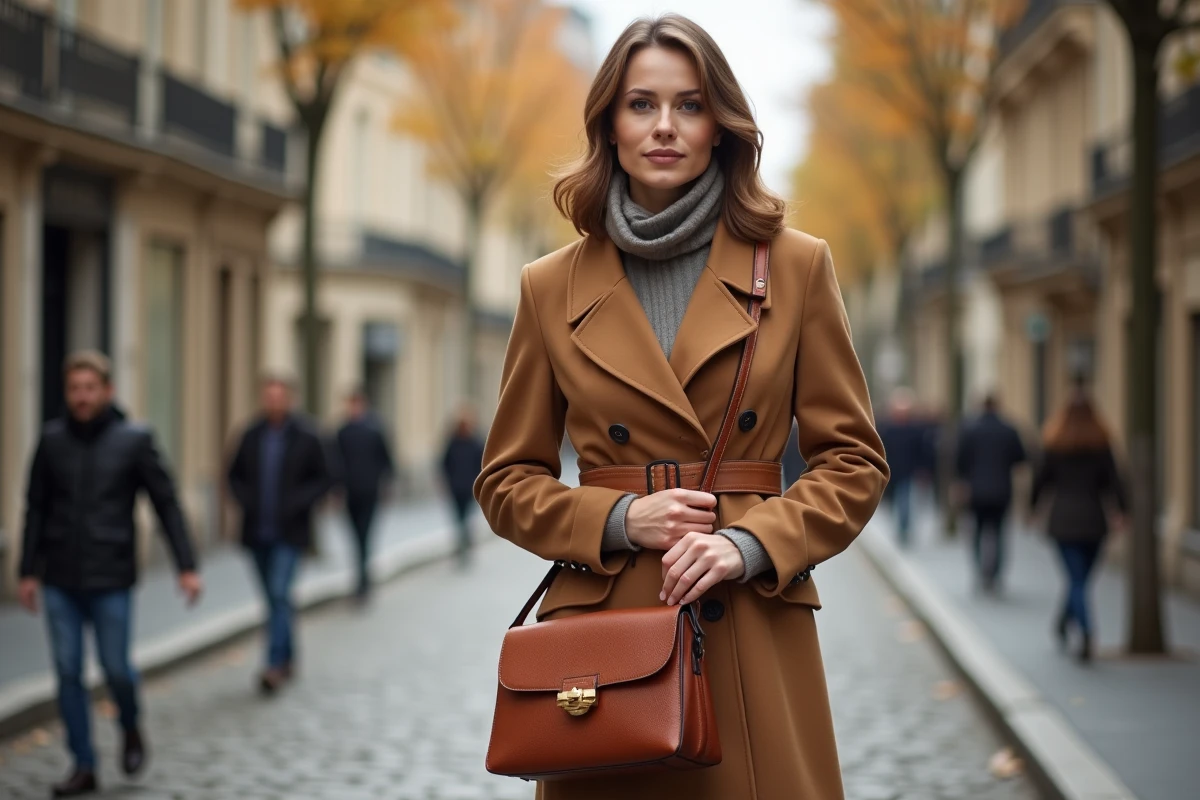
Seasonal accessories are not just a checklist of items. The real difference lies in the finishes, materials, and the coherence between the elements worn together. Here, we analyze the technical choices that transform a decent outfit into a mastered silhouette.
Tanning and finishing of leather: what separates a good accessory from a gadget
Leather remains the reference material for bags, belts, and small leather goods. However, not all leathers age the same way. A full-grain vegetable-tanned leather develops a patina over time, while coated leather or faux leather cracks after a few months of use.
For a belt, we recommend a minimum thickness sufficient to prevent the buckle from distorting the leather after six months. Edge finishes (painted, burned, or folded) indicate the level of care taken in manufacturing. A raw edge that frays betrays a low-quality product, regardless of the displayed price.
When it comes to bags, the interior lining and the strength of the reinforcement stitches at the corners matter more than the exterior design. A grained leather bag is more resistant to everyday scratches than smooth leather, making it a more suitable choice for regular use. To compare the available ranges, you can see the accessories on FashionUp and directly evaluate the material sheets.
Subtle jewelry and alloys: choosing pieces that last several seasons

The quiet luxury trend has reshuffled the codes. Fine jewelry, without visible logos, worn in measured accumulation (two or three bracelets, a choker, asymmetrical earrings) replaces bulky and branded pieces. This shift, documented by trend reports from Lyst and Vogue Business for 2024-2025, particularly affects those aged 25-40.
The alloy determines the longevity of the jewelry. 316L stainless steel resists oxidation and water, making it suitable for daily wear. Gold-plated jewelry, on the other hand, wears out with repeated contact with skin and perfumes. For earrings worn every day, a hypoallergenic alloy (titanium or surgical steel) avoids frequent irritations associated with low-quality nickel-plated brass.
In terms of colors, mixing gold and silver in the same outfit is no longer a style taboo. The operational rule: choose a dominant metal (the one from the watch bracelet or the belt buckle) and limit the other to a single accent point.
Textile accessories: scarves, shawls, and the role of fiber
A twill silk scarf holds a knot better than satin, thanks to the twist of its weave. This is a detail that generalist articles often overlook, but it changes the practical use: a slippery scarf constantly unties itself and ends up at the bottom of the bag.
The textile composition dictates the drape and maintenance. Here are the fibers to prioritize based on use:
- Natural silk (twill or Chinese crepe) for knotted scarves around the neck or as headbands, due to its grip and matte shine.
- Fine merino wool for lightweight mid-season shawls, with a good warmth-to-bulk ratio and superior resistance to pilling compared to acrylic.
- Mixed linen (linen-cotton or linen-viscose) for summer stoles, more breathable than polyester and less wrinkly than pure linen.
A well-chosen scarf also works as a bag accessory, tied to a handle, to break the monotony of a solid model. This technique adds a touch of color without changing bags each season.

Shoes and bags: coherence through proportions, not strict matching
The old reflex of matching the color of shoes to that of the bag belongs to a bygone era. Coherence is now built through proportions and textures. A small structured bag balances with fine shoes (pumps, low-heeled mules). A soft tote calls for more substantial shoes (chunky loafers, thick-soled sneakers).
Data from Vestiaire Collective for 2024 confirms that leather goods represent a growing share of second-hand accessory purchases, particularly among 18-30 year-olds. The accessory often becomes the first luxury purchase via these platforms, altering the seasonal logic. A second-hand bag bought for its quality of craftsmanship can be worn for several seasons, even years.
For shoes, the most overlooked technical criterion remains the insole. A leather insole breathes and molds to the foot, while a synthetic insole generates sweat and wears out faster inside. On loafers or ballet flats worn without socks, this difference is felt within the first week.
Sunglasses and watches: two style accessories with technical framing
Sunglasses are not just an aesthetic accessory. The protection category (from 0 to 4) and the UV filtration standard determine their actual utility. A stylish pair without appropriate UV filtration damages the retina more than it protects it, as the pupils dilate behind tinted lenses.
For frame choice, the rule of facial proportions remains the most reliable: a frame should not exceed the width of the face or drop below the cheekbones. Angular shapes balance a round face, while rounded shapes soften a square face. This principle holds true for all seasons.
Regarding watches, the diameter of the case relative to the wrist width is the key parameter. A case that is too large visually crushes the hand, while a case that is too small goes unnoticed. The strap (leather, Milanese mesh, NATO fabric) allows for varying the style of the same watch without multiplying purchases.
The most durable accessories are those whose quality of craftsmanship exceeds the current trend. Investing in noble materials and careful finishes ensures use over several seasons, whether the piece is bought new or second-hand. Style is built through the patient accumulation of well-chosen pieces, not through a complete renewal with each seasonal change.