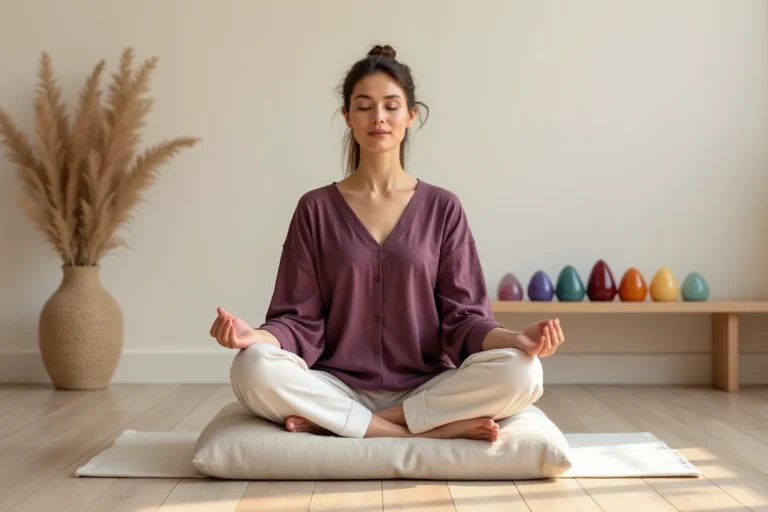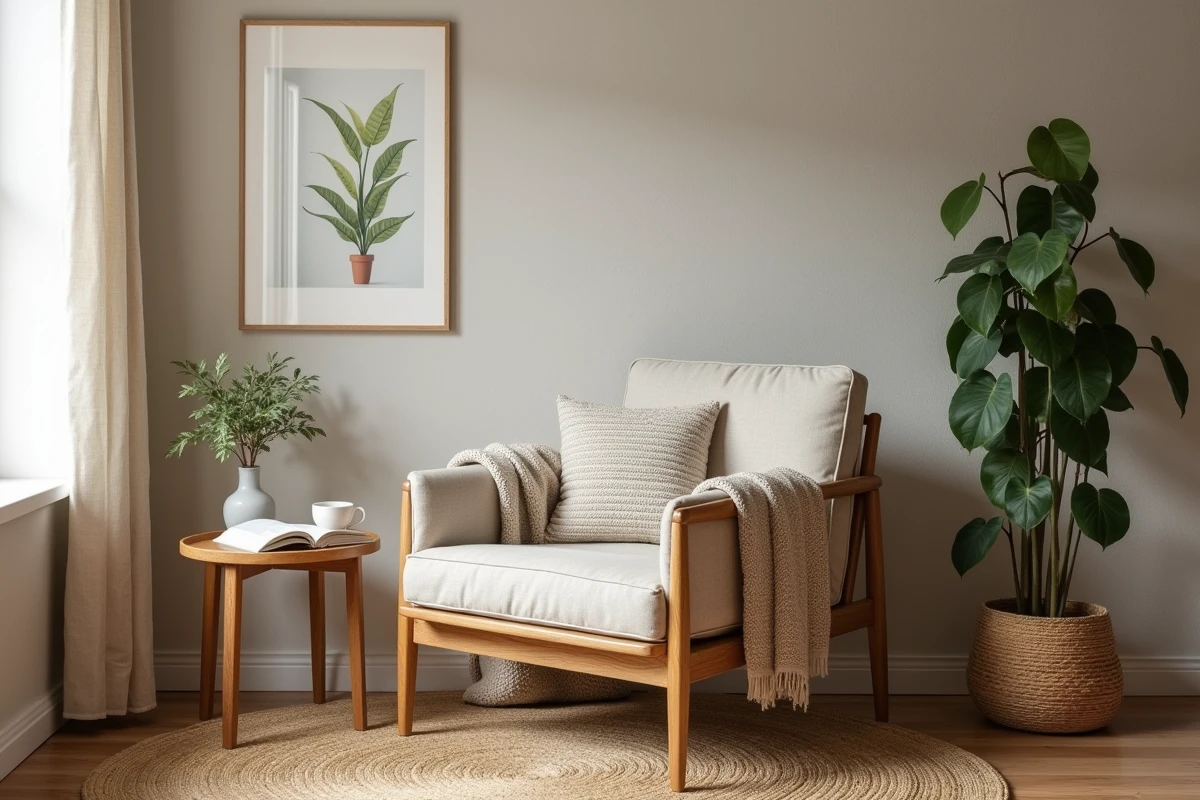
A comfortable sofa, soft lighting, a room where you can breathe: the feeling of calm at home rarely comes from a major renovation. It relies on a few precise choices of colors, materials, and furniture arrangement. Transforming your interior into a haven of peace is primarily about understanding how each element in a room affects our perception of space and comfort.
Color Temperature and Visual Comfort in Every Room
Have you ever noticed that a room painted in pure white can seem cold, almost clinical? It’s not a matter of taste: it relates to the color temperature perceived by the eye.
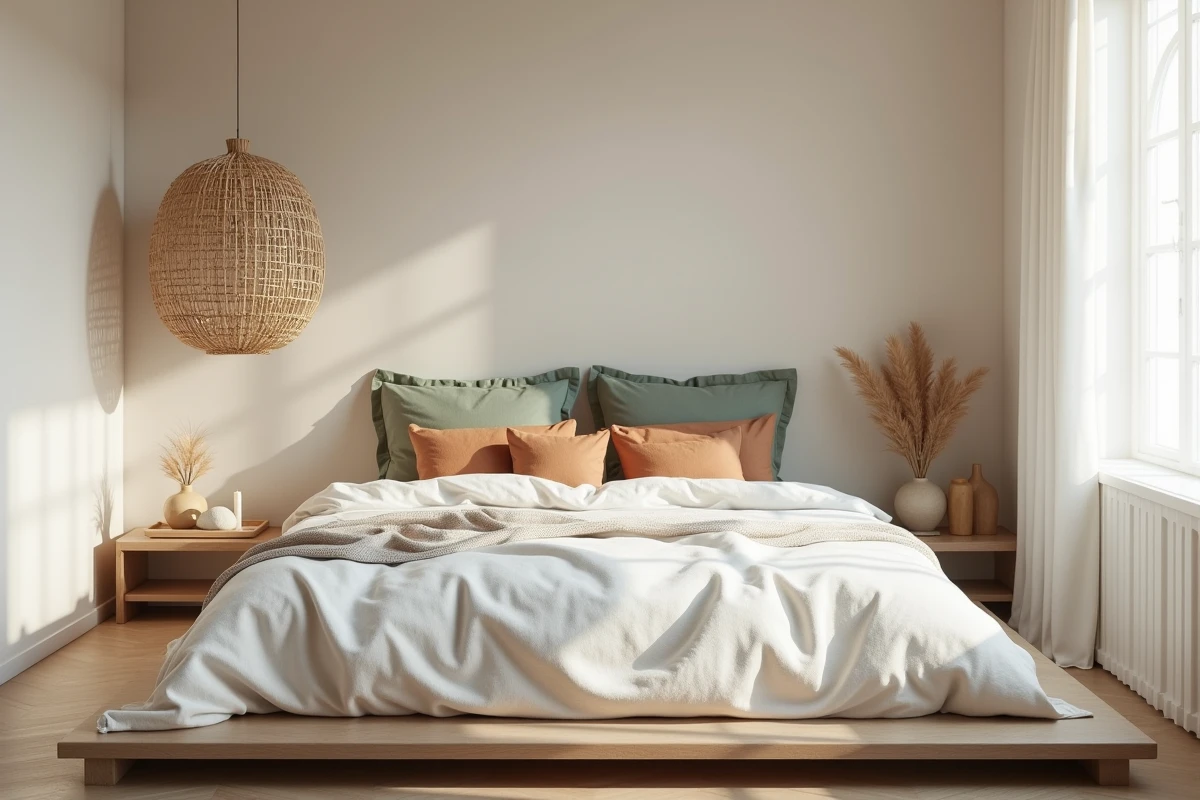
Warm shades (sandy beige, soft terracotta, sage green) absorb some of the light and reflect soothing hues. In a living room or bedroom, they create a visual envelope that invites relaxation. Cool tones (glacier blue, pearl gray) are better suited for an office or bathroom, where a feeling of freshness and clarity is desired.
The common trap: choosing a color from a swatch in the store, under neon lighting, only to find it looks completely different at home. Always test a sample directly on your wall, observe it in the morning, at the end of the day, and under artificial light. The same shade can shift from warm to dull depending on the room’s orientation.
For wall decor, the resources offered by Perspective Maison allow you to visualize color and material combinations before embarking on a complete project.
Natural and Artificial Light: Orchestrating Both Sources
Natural light remains the most powerful lever for transforming the ambiance of an interior. Before buying any lamp, start by observing how the sun moves through your rooms throughout the day.
Maximizing Daylight
Thick curtains sometimes block half of the available brightness. Replacing heavy blackout curtains with lightweight linen sheers often suffices to create a sense of space and lightness in the living room or bedroom.
A mirror placed facing a window does more than just decorate: it redistributes light to the darker areas of the room. One well-placed mirror provides more light than an additional lamp.
Choosing the Right Artificial Lighting in the Evening
In the evening, the goal changes. We seek to recreate soft lighting, similar to that of the end of the day. Warm temperature bulbs (around 2700 kelvins, indicated on the packaging) produce that orange tone that promotes relaxation.
- Table lamp with fabric shade: diffuses enveloping light, ideal near a reading chair.
- Warm LED string lights: create a soft focal point in a corner of the room without glare.
- Adjustable floor lamp: allows you to direct light toward a wall or ceiling for a soothing indirect effect.
Avoid ceiling lights as the sole source of illumination: they produce flat light that eliminates shadows and relief, making the room feel monotonous.
Materials and Textures for Well-Being
Vision isn’t everything. Touch plays a direct role in the sensation of comfort. A soothing interior mixes different materials that invite contact.
Wrinkled linen on a cushion, raw wood from a shelf, thick wool from a throw: each texture sends a signal of warmth to the brain. Conversely, an excess of smooth and shiny surfaces (glass, polished metal, plastic) creates a more distant atmosphere.
Three different textures per room are enough to create depth without visually overwhelming the space. For example, in a living room: a fabric sofa, a wooden coffee table, a jute rug. The mix works because the materials are natural and complement each other.
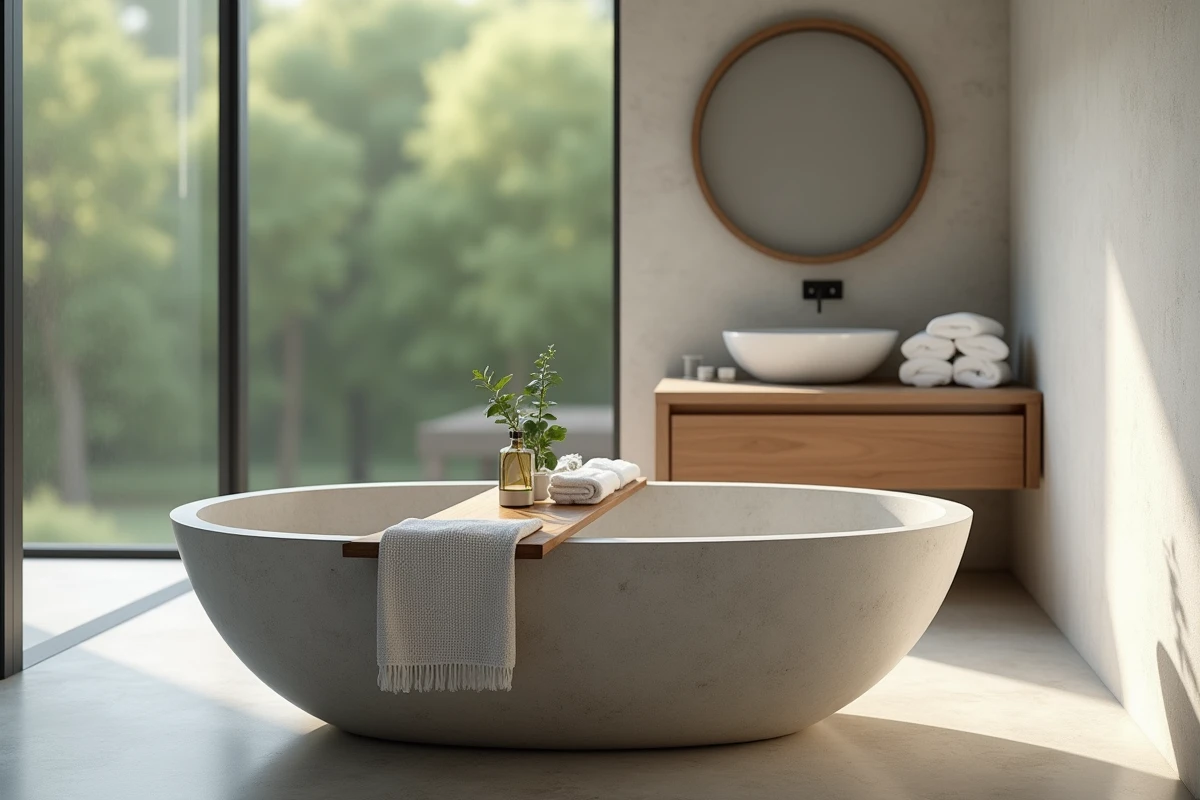
Green plants add a lively texture that nothing else can replace. A ficus in a corner, a pothos on a high shelf: these natural elements bring life back into a space that is too mineral. Their maintenance remains simple if you choose varieties suited to the actual light conditions of the room.
Furniture Arrangement: Clearing Circulation Lines
A cluttered living room, even beautifully decorated, will never be relaxing. The key lies in circulation: the path your eyes and feet take when you move through the room.
Have you ever felt relief just by moving a piece of furniture that was blocking the way? A living space where you can move freely reduces tension without you even realizing it.
- Keep large furniture away from doors and windows to preserve passageways.
- Create a “deliberate void”: a corner of the room with nothing in it, even if small, gives a visual breath to the whole.
- Group functions: reading corner (armchair, lamp, small table), dining area, relaxation zone. Each area has its logic, which avoids diffuse clutter.
In a bedroom, the position of the bed matters more than any other piece of furniture. Place the headboard against a solid wall, facing the door: this arrangement, often recommended in interior design, provides a sense of security that facilitates falling asleep.
Low furniture (side tables, benches, low dressers) frees up the visual field at height. In a small space, they create the impression that the ceiling is higher and that the room breathes more.
Transforming your interior into a true haven of peace doesn’t require changing everything at once. Replacing a sheer curtain, repositioning a lamp, adding a linen cushion to the sofa: each action alters the perception of space. The most effective approach is to start with the room where you spend the most time, observe what bothers you, and then act on one parameter at a time.