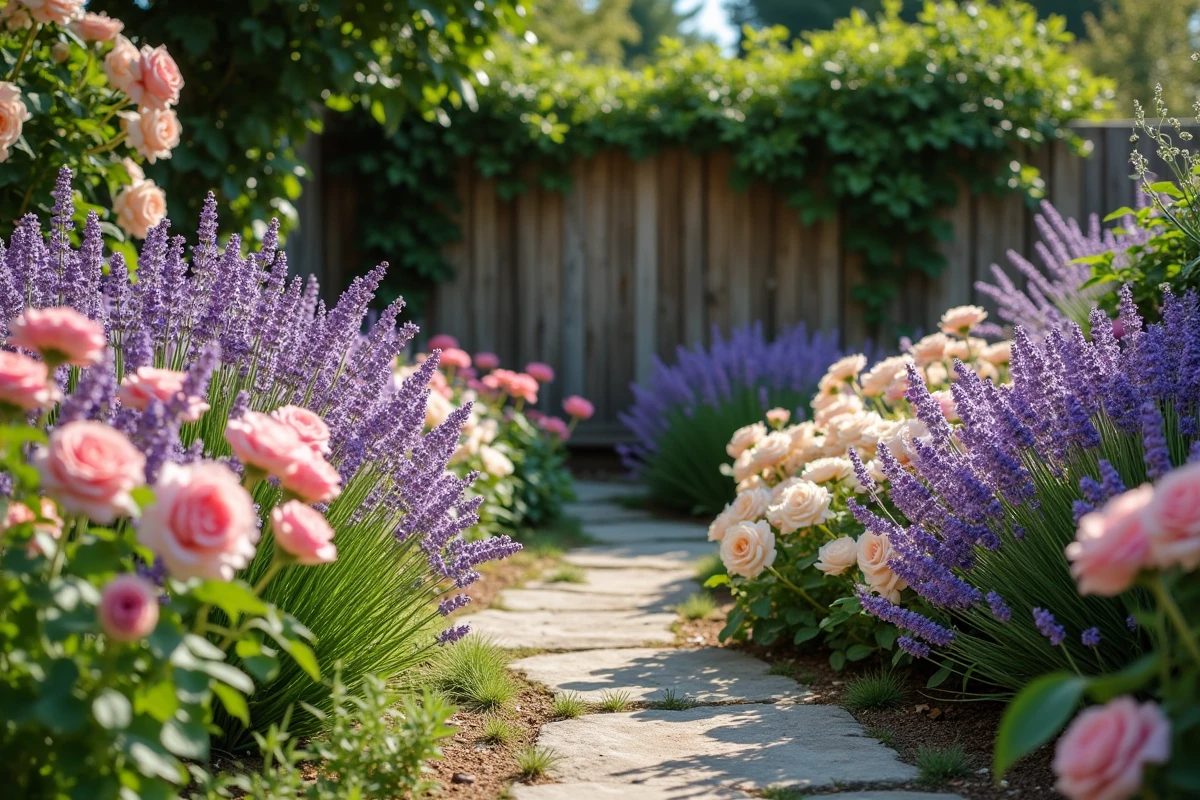
A garden that remains in bloom from March to October relies less on the number of varieties planted than on their compatibility with the soil, exposure, and local climate. Choosing flowers suited to these three parameters avoids most failures in establishment and limits interventions during the season.
Soil, exposure, and water: three criteria before selecting flowers
Before browsing a catalog of perennials or annuals, the first instinct is to observe the garden’s soil. Clayey, heavy, and moist soil in winter is not suitable for the same plants as sandy, well-draining soil. Lavender, perovskia, or gaillardia thrive in dry, poor ground, while daylilies or phlox prefer fresh, organic-rich soil.
Exposure plays a similar role. A bed facing directly south receives direct sunlight for most of the day: water-efficient flowers (lantana, Buenos Aires verbena, zinnia) find their natural place there. Conversely, a semi-shaded bed will better accommodate perennial geraniums or astilbes.
The third parameter, often underestimated, concerns water availability. Since the recurring heatwaves observed in recent years, French nurseries have highlighted “dry garden” or “water-efficient” sections, where the main argument is no longer color but reduced watering. Adapting the choice of flowers to the actual water resources of the garden avoids waste and summer losses.
To delve into each variety according to these criteria, the flowers from Conseil au Jardin detail the growing conditions species by species.
Perennials or annuals: understanding the difference to structure a flower bed
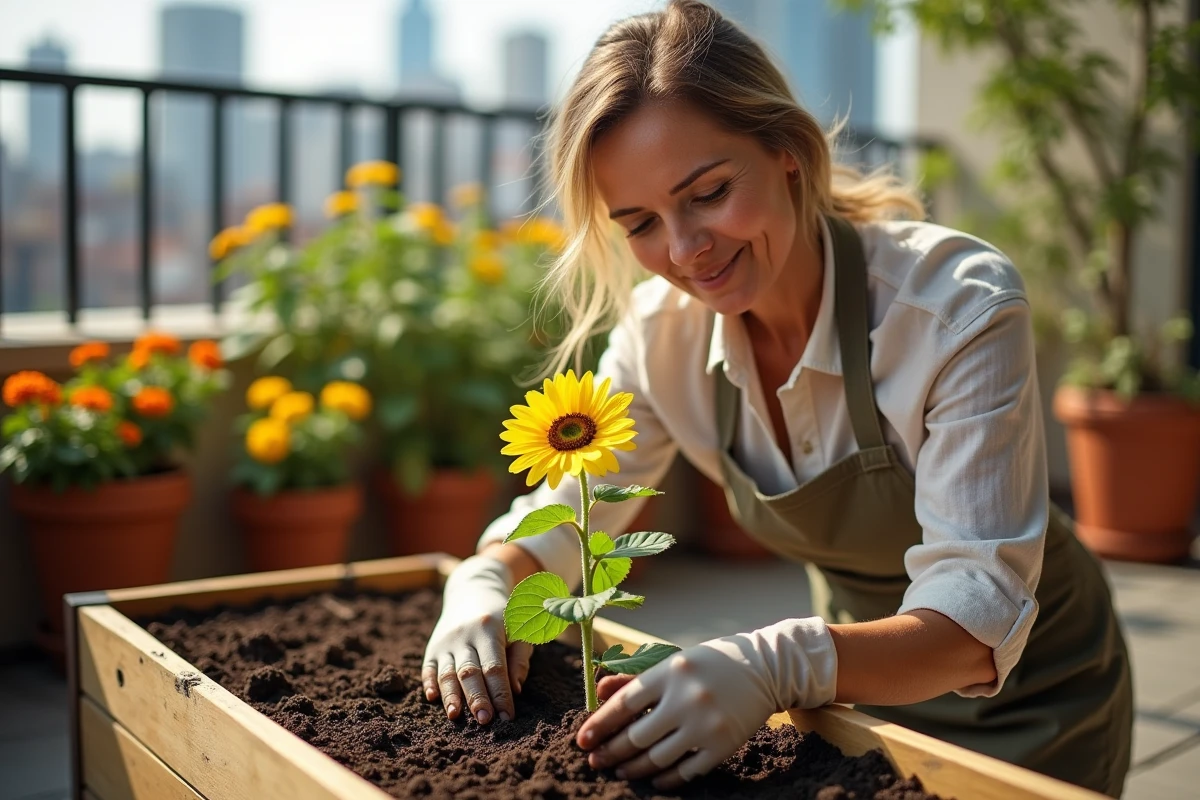
The distinction between perennials and annuals shapes the garden’s structure over several years. A perennial flower (echinacea, aster, yarrow, nepeta) regrows each spring from its root. It requires a higher initial investment but eliminates the need to replant each season. Professionals increasingly recommend perennials for their durability and better root anchoring, which stabilizes the soil in beds.
An annual (cosmos, zinnia, nasturtium) germinates, blooms, and dies in the same year. Its advantage: often longer and more spectacular blooming during the beautiful season. It also allows for testing colors or locations without commitment.
The most effective approach combines both categories. Perennials form the permanent framework of the bed, while annuals fill the empty spaces in the first year, while the perennials establish themselves. This simple principle avoids the frequent “gap” effect in newly planted gardens.
Some proven associations
- Echinaceas and cosmos in the background, perennial geraniums at the edge: clear vertical structure, blooming spread from early summer to autumn.
- Lavenders and gauras at the center of a dry bed, ornamental sages as punctuation: mauve and white palette, very little watering needed after establishment.
- Asters and rudbeckias for an end-of-season bed, complemented by annual zinnias to ensure color from July.
Pollinator-friendly flowers in the garden: a useful choice beyond aesthetics
The trend towards pollinator-friendly and biodiversity-supporting flowers goes beyond mere fashion. Naturalist associations and many local authorities recommend species such as cosmos, yarrow, echinacea, lavender, or ornamental sage to support pollinators and beneficial insects in private gardens.
Planting pollinator-friendly flowers provides a direct benefit for the gardener: by attracting beneficials (hoverflies, ladybugs, solitary bees), these plants contribute to the natural regulation of pests. Fewer aphids on neighboring roses, better pollination of the adjacent vegetable garden.
The ban on synthetic pesticides for individuals, effective for several years and reinforced by the Ecophyto plan, makes this choice even more relevant. Robust flowers that require little treatment (gaura, rudbeckia, nepeta, asters) effectively replace fragile horticultural varieties that previously required regular spraying.
Minimal flower maintenance: the actions that change blooming
Even the most frugal varieties benefit from a few targeted interventions. The most time-efficient action remains the regular removal of faded flowers. On a cosmos, dahlia, or zinnia, removing spent heads stimulates the production of new buds. Without this action, the plant focuses its energy on seed formation, and blooming stops prematurely.
Mulching is the second lever. A layer of shredded material, straw, or fallen leaves at the base of the beds retains moisture, limits weed growth, and protects the roots of perennials in winter. During dry periods, a mulched bed requires significantly less watering than bare soil.
Three common mistakes to avoid
- Watering little but often: roots remain near the surface, and the plant becomes dependent. It is better to water deeply and less frequently, encouraging roots to grow deeper.
- Pruning perennials too early in the fall: dry stems protect the root from frost and serve as refuge for overwintering insects. Late winter pruning, just before vegetative resumption, is preferable.
- Planting too closely out of impatience: perennials reach their adult size in two or three seasons. Respecting the planting distances indicated on the label avoids root competition and disease problems related to lack of aeration.
A flowering garden that lasts several seasons without excessive effort ultimately relies on choices made in advance: the right plant in the right place, mulched and free of faded flowers. The rest, the plant takes care of.