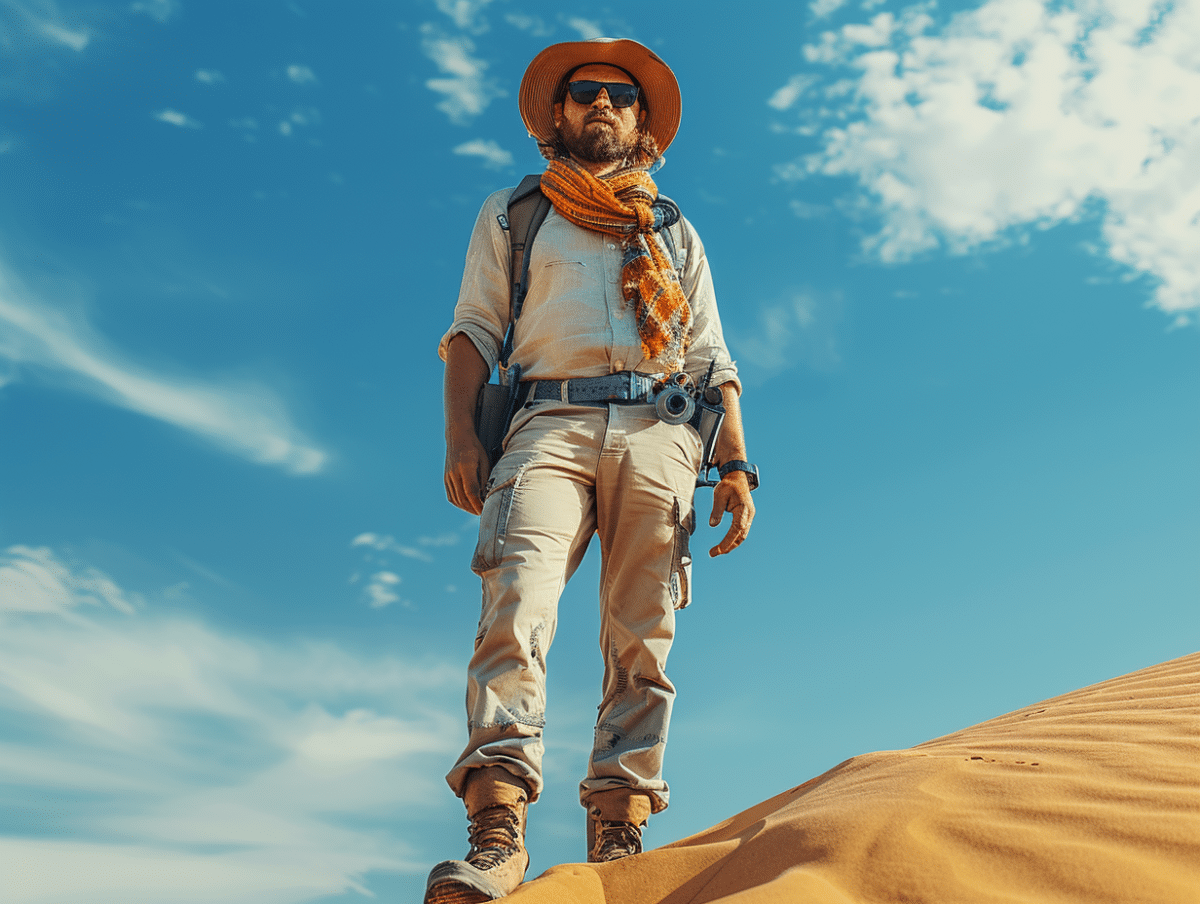
Facing the arid expanses of the Sahara requires meticulous clothing preparation. The extreme temperatures, fluctuating between the sweltering heat of the day and the surprising chill of the night, demand an appropriate wardrobe. Lightweight, breathable, and light-colored clothing is essential to reflect the sun’s rays and promote sweat evaporation. After sunset, additional layers are necessary to protect against the cold. A head covering, sunglasses, and a scarf to shield against sandstorms are also essential accessories. Proper clothing preparation ensures comfort and safety in this unforgiving environment.
The wardrobe essentials for facing the Sahara sun
Choosing your outfit for the Sahara requires special attention to fabrics and colors. Opt for cotton or linen clothing, natural materials that promote skin breathability and provide increased comfort in the extreme desert conditions. A Sahara outfit for women or men consists of loose-fitting pieces to facilitate air circulation and limit sweating. White and pastel colors should be favored to reflect sunlight rather than absorb it.
The black attire of the Bedouins is not just a cultural heritage but a proven clothing trick to regulate body temperature. Black, under such brutal latitudes, utilizes the ventilation effect to maintain surprising coolness. While this option may seem counterintuitive, it remains a lesson in adaptation not to be overlooked. Complete your gear with hygiene products specific to the desert for adequate sun protection and hydration.
For a trip to the Moroccan desert or elsewhere in the vastness of the Sahara, experts recommend incorporating additional protective elements: wide-brimmed hats, UV protection sunglasses, and lightweight scarves. These accessories are not just aesthetic complements; they serve as an essential barrier against the sun’s onslaught and sand gusts, thus preventing skin and eye discomfort that could compromise the desert experience.
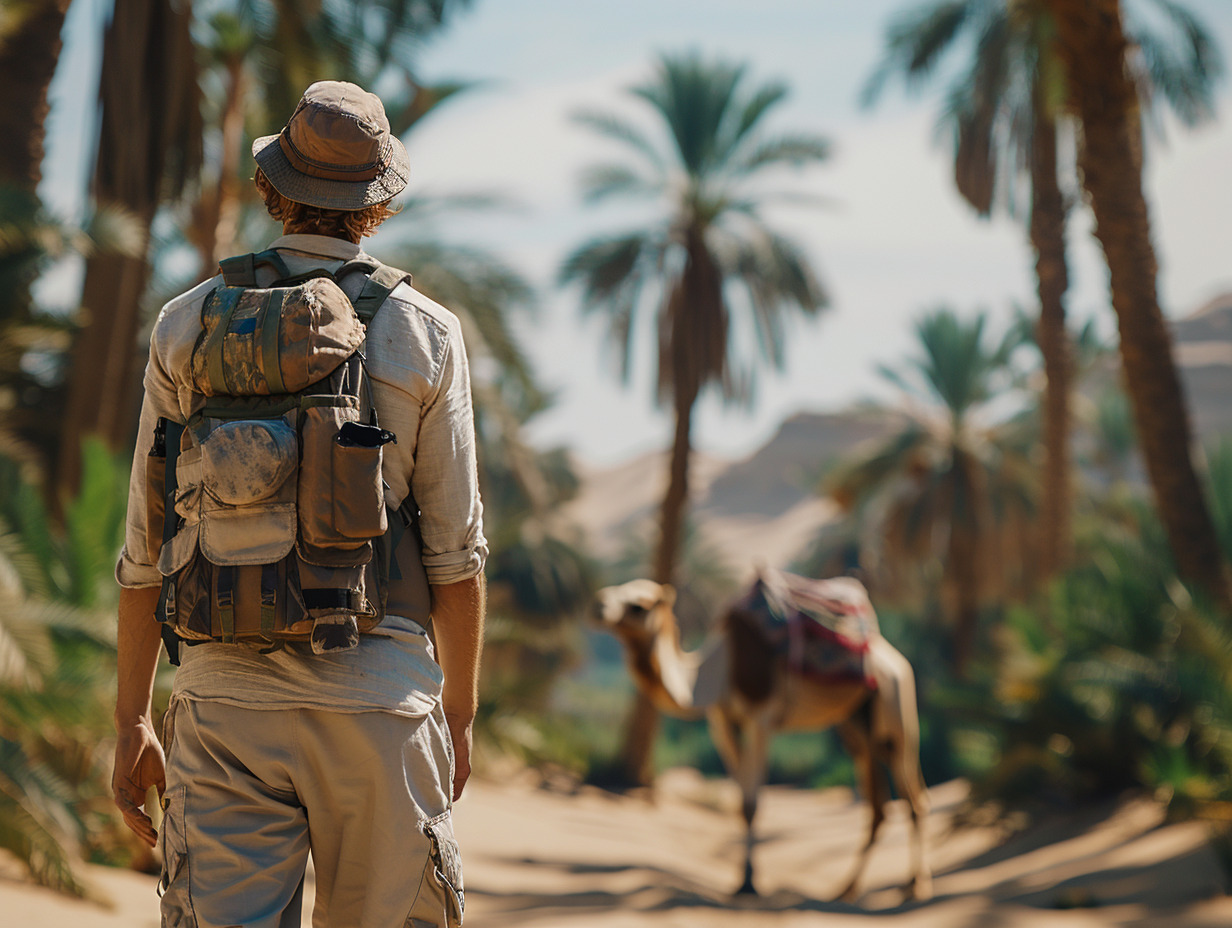
Tips for optimal protection during Saharan nights
The night in the Sahara desert brings significantly cooler temperatures than those encountered during the day. Include in your desert outfit a windbreaker or warm coat to counter the drop in temperature after sunset. Insulating materials like wool or high-performance technical fabrics are recommended to retain body heat. Ensure that your jacket is spacious enough to layer clothing if necessary, without hindering mobility.
The choice of sleeping bag is crucial for ensuring restorative sleep in the heart of the Sahara. Opt for a model specifically designed for the low temperatures of the desert night. A quality sleeping bag should provide good insulation while being breathable to prevent condensation. Models with a soft lining add extra comfort and are appreciated during starry nights in the bivouac.
The types of camps in the Sahara vary, offering experiences ranging from budget to luxury. Regardless of the comfort level chosen, make sure to have adequate shelter to protect against the nighttime wind and sand. Traditional Berber tents, for example, are designed to provide effective protection while allowing for some air circulation. Do not overlook this aspect of the trip, as it significantly contributes to your well-being during Saharan nights.