
The volumetric ratio between rice and water is not enough to guarantee well-cooked grains. The variety, the degree of processing of the product, and even the brand radically change the cooking behavior. We recommend treating each new package as a variable to test, not as a constant.
Variability Between Brands and Precooked Rice: The Parameter No One Calibrates
Some whole grain rice references sold in supermarkets are partially precooked in factories. The cooking time indicated on the packaging then reflects a product that is already hydrated, which skews any attempt to apply a standard ratio.
We observe that two packages of whole grain rice from different brands, placed under the same conditions, can yield opposite textures. One may still be crunchy in the center, while the other is already mushy. The cooking time for whole grain rice varies greatly depending on the brand, and this information is absent from almost all online cooking guides.
The only reliable method: taste a grain a few minutes before the theoretical end of cooking, then adjust. Any recipe that gives a fixed time without mentioning this sensory check oversimplifies. Among the tips for successful rice cooking, this habit of checking at the end of cooking remains the most underestimated.
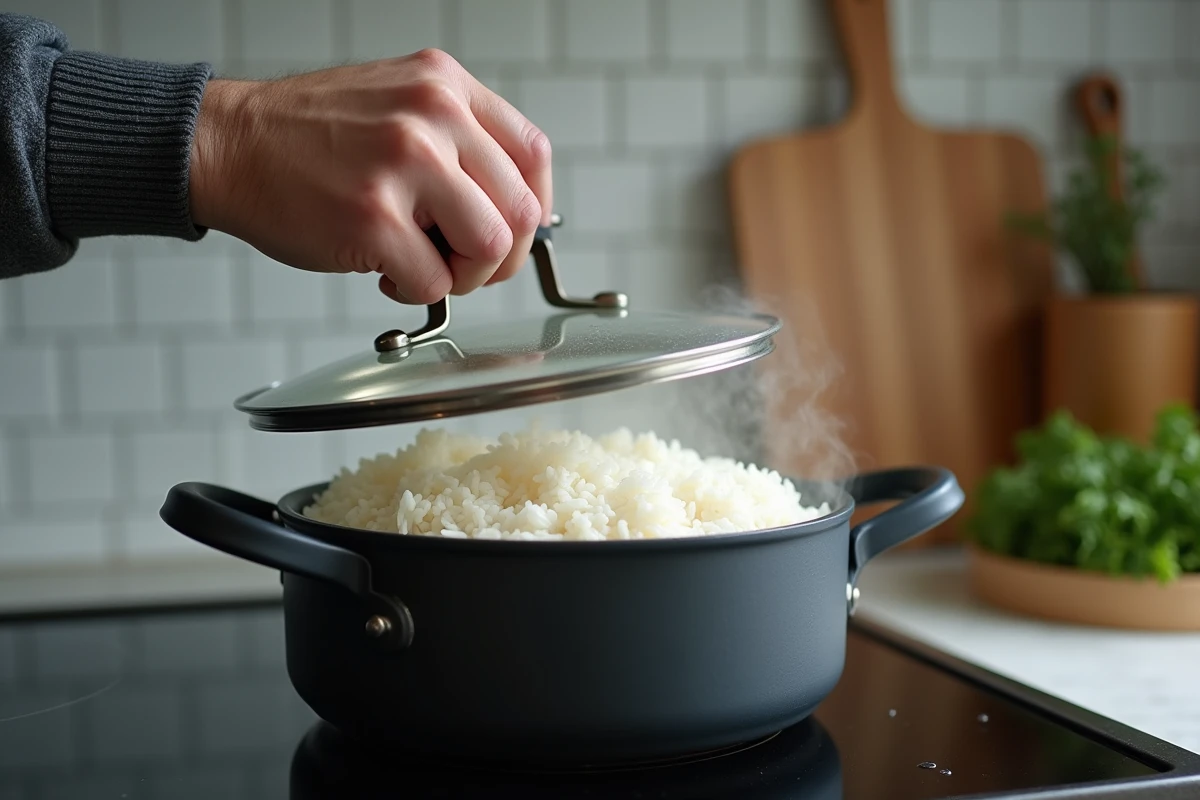
Absorption Cooking of Basmati Rice: Mastering the Post-Cooking Rest
Absorption cooking and cooking in a large amount of water do not meet the same constraints. In absorption, all the water is absorbed by the grain. The slightest excess produces waterlogged rice, while the slightest deficit leaves a burnt bottom.
For long-grain basmati rice, we use a ratio of 1 volume of rice to 1.5 volumes of water. The rice is rinsed in cold water until the water runs clear, then poured with the water into a heavy-bottomed pot. Bring to a boil, cover, and reduce to the minimum.
The technical point that most articles gloss over: the resting time with the lid closed after turning off the heat is as crucial as the cooking itself. For whole grain rice cooked by absorption, this resting period should last at least ten minutes. During this phase, the residual steam finishes penetrating the grain without softening the surface. Lifting the lid during these minutes destroys the consistency of the texture.
Why the Pot Bottom Changes Everything
A thin stainless steel pot distributes heat unevenly. Grains in direct contact with the bottom cook faster and stick. A thick cast iron or encapsulated aluminum bottom distributes temperature and reduces the risk of crust.
If you only have a thin pot, placing a heat diffuser between the flame and the pot partially corrects the problem.
Rinsing and Soaking Rice: Two Distinct Actions with Different Effects
Rinsing removes surface starch, which is responsible for stickiness. For white rice, three to four rinses under cold water are sufficient. For whole grain rice, rinsing also serves to remove impurities related to the grain’s husk, which goes beyond just the texture issue.
Soaking is a strategy in its own right for whole grain rice. Soaking for at least two hours in cold water softens the husk and significantly reduces cooking time. The grain cooks more evenly, without the contrast between an overly soft exterior and a still firm center.
- White basmati rice: rinsing only, no soaking needed. The rinsing water must be clear before cooking.
- Whole grain rice: rinse then soak for a minimum of two hours. Drain before starting absorption cooking.
- Sushi rice: intensive rinsing to remove as much starch as possible, then absorption cooking with a slightly lower water ratio. The post-cooking rest is extended.
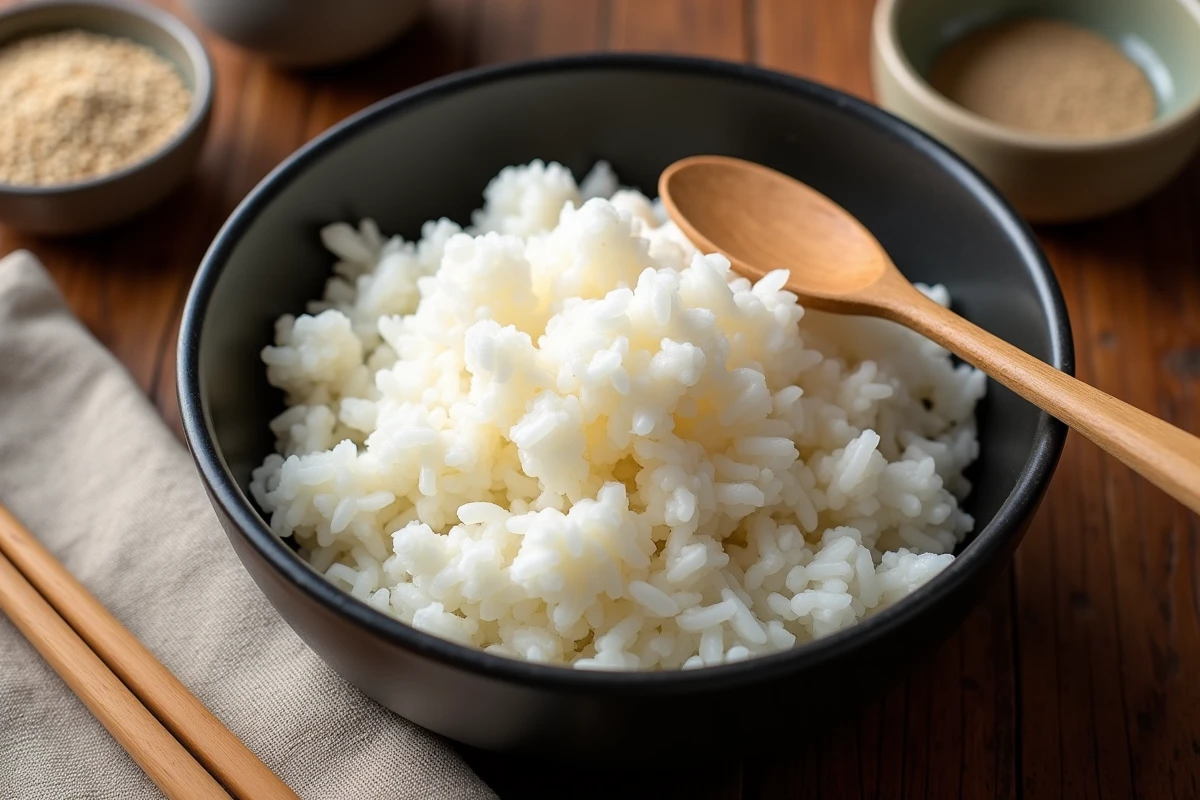
Flavoring and Seasoning Rice: Intervening at the Right Moment
Adding spices or oil to the cooking water does not yield the same result as incorporating them afterward. In absorption, the aromatics infuse into the grain during cooking, resulting in a more integrated flavor than seasoning at the end of preparation.
We recommend sautéing the rinsed and drained rice in a drizzle of oil for one to two minutes before adding the water. This dry step, inspired by the pilaf technique, coats each grain with a lipid film that limits sticking and adds a slight toasted note.
Some Combinations That Work Well
- Basmati and green cardamom: add one or two crushed pods directly into the cooking water. The aroma diffuses without overpowering.
- Jasmine rice and pandan leaf: the tied leaf is placed in the pot at the start. It adds a sweet vegetal note typical of Southeast Asian cuisines.
- Whole grain rice and broth: replace water with vegetable broth to compensate for the more neutral taste of whole grain rice. Adjust the salt accordingly.
Always pour cold water (or broth) over the rice, then bring to a boil. Starting with boiling liquid seizes the outside of the grain too quickly and creates uneven cooking.
Well-cooked rice does not depend on a single timer or a universal ratio. It is the combination of rinsing suited to the variety, the right container, the post-cooking rest, and sensory control at the end that produces a consistent grain. Change the brand or variety, and recalibrate everything from the beginning.