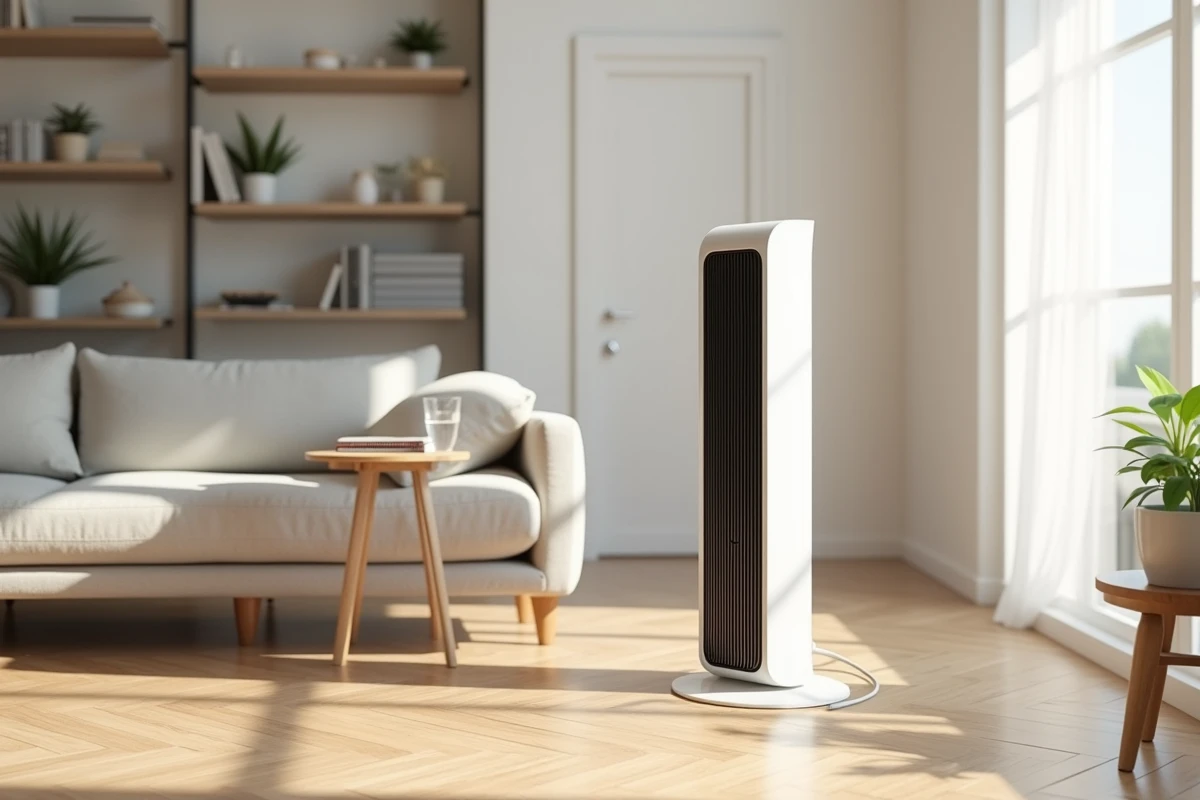
The Valberg standing fan, distributed by Electro Dépôt, focuses on a low price to attract buyers struggling with the heat. After several weeks of intensive use, we have gathered enough insight to evaluate what this Valberg fan is really worth in daily life, beyond the product specifications.
Valberg’s AC Motor: Thermal Limits in Continuous Use
The motor block of the Valberg fan relies on a classic alternating current architecture, without brushless technology. This technical choice has direct consequences for prolonged use.
After several hours of continuous operation at maximum speed, we observe a noticeable rise in temperature of the motor housing that is perceptible to the touch. On a DC brushless motor, thermal dissipation is better managed due to the absence of brushes, which reduces internal friction. The Valberg, on the other hand, heats up more, and this accumulated heat accelerates the aging of the bearings.
The starting torque remains strong, without hesitation or unwanted vibrations during startup. However, we recommend avoiding repeated on/off cycles over short periods: each restart puts significant stress on the stator windings. In linear operation over an entire day, the AC motor handles the load without dropping out, but the power consumption remains higher than that of a mid-range DC equivalent.
We shared our review of the Valberg fan tested by Batiwiz, detailing the airflow measurements taken at each speed, and the conclusions support this observation: the motorization does the job, without excelling in endurance.
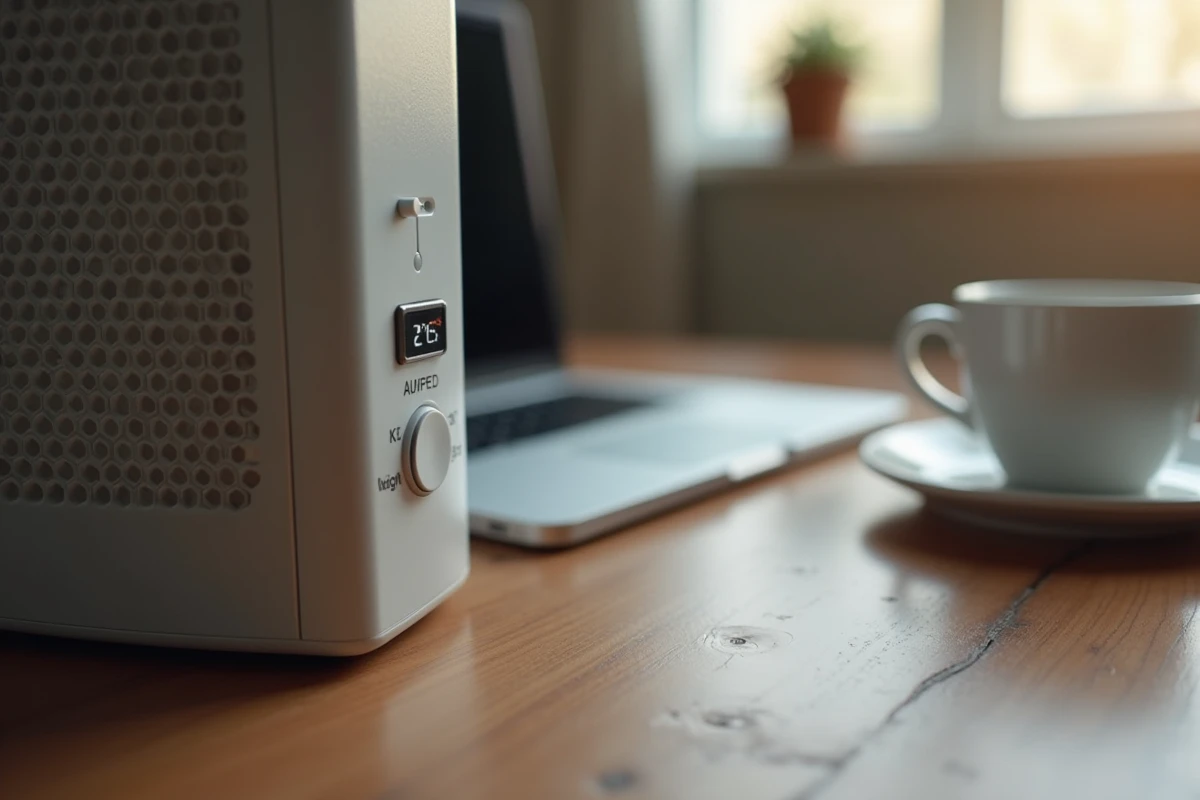
Noise Level of the Valberg Fan: How Intermediate Speeds Change Things
Speed 2 offers the best compromise between airflow and silence. At speed 1, the airflow produced remains too weak to cool a room larger than a few square meters. At speed 3, the blade noise and aerodynamic rush become quite bothersome for nighttime use or remote work.
The residual noise from the Valberg does not solely come from the motor. Most of the noise nuisance is generated by the blades themselves, whose injected plastic profile lacks aerodynamic finesse. The leading edges have slight molding burrs that disturb the airflow and create a characteristic whistle at high speed.
In this price segment, this defect is not surprising. Column fans at a similar price point often produce a more diffuse but continuous noise, whereas the standing Valberg generates a more localized sound. The choice depends on each user’s tolerance.
Assembly and Durability of the Valberg Device After Intensive Use
The assembly of the Valberg reveals its weaknesses after a few weeks. The critical point concerns the oscillation system.
- The horizontal rotation mechanism relies on a plastic gear that develops play after sustained daily use, causing a slight clicking sound at each end of travel.
- The height adjustment of the telescopic stand loses rigidity: the tightening collar, also made of plastic, no longer holds the rod as firmly as when new.
- The front grille easily detaches for cleaning, which is a plus for maintenance, but the fixing legs are fragile and break if forced during reassembly.
The quality of the plastics used remains the Achilles’ heel of this device. The structural parts are not reinforced with fiberglass, unlike some competing models sold for a few euros more. For moderate seasonal use, this is acceptable. For daily operation over several months, the mechanical lifespan raises questions.
Regular Maintenance and Blade Soiling
The accumulation of dust on the blades measurably degrades airflow within a few weeks. Bi-monthly cleaning is necessary during intensive use. Without a pre-filter (unlike some air purifier fans in the Valberg range like the T5 Wind Pure), the blades capture all airborne particles and redistribute them in the room.

Electro Dépôt Customer Service and Valberg Spare Parts: What You Need to Know
Valberg is a private label brand (MDD) owned and managed by Electro Dépôt. Customer service is therefore handled directly by the store, via the address in Faches-Thumesnil or the dedicated email [email protected]. There is no third-party manufacturer contact.
For other Valberg devices (like the WD 8614 washer-dryer), Electro Dépôt announces a availability of spare parts for fourteen years from the date of manufacture. This overall brand policy suggests a similar follow-up for the fans, even if the specific confirmation for the standing model does not appear on the product sheet.
In practice, the parts most likely to fail on this type of fan (oscillation gear, control button, blades) are rarely listed individually in the spare parts catalogs of private label brands. Replacing a broken component often means buying the entire device again, which diminishes the value of the warranty on a budget product.
Valberg Fan: For What Type of Use
This Valberg fan fulfills its primary role: circulating air in a room for a minimal purchase cost. We recommend it for seasonal supplementary use, in a bedroom or a modest-sized office.
- Suitable use: summer ventilation supplement for a few months, secondary room, tight budget.
- Not recommended use: continuous operation over long periods, main room of large volume, dusty environment without regular cleaning.
- Alternative to consider: a column fan with a DC motor in a slightly higher price range offers better energy efficiency and increased durability of mechanical components.
The quality-price ratio of the Valberg remains consistent with its positioning. Expecting an entry-level device to have the robustness of a professional model would be unreasonable. But for a user looking for a fan capable of running several hours a day for several months in a row, the Valberg reaches its structural limits before the end of the second season.