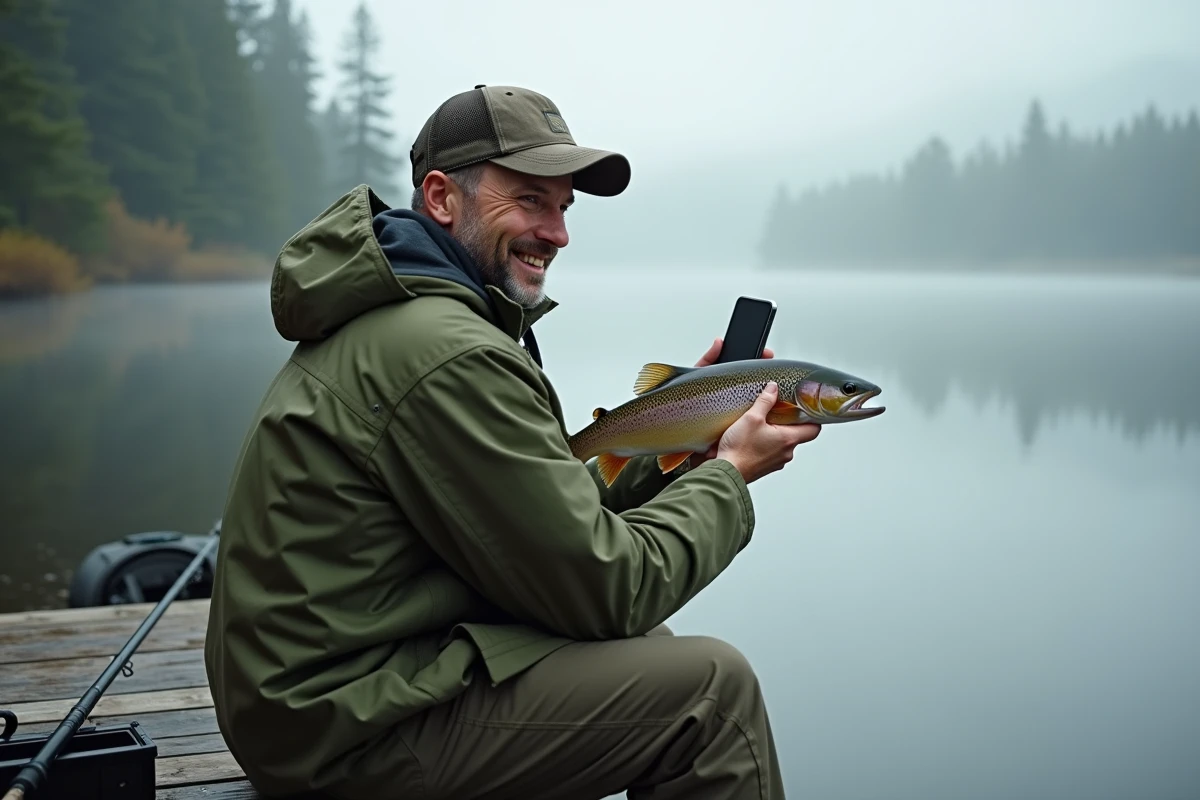
A digital fishing log replaces the paper log by recording each outing with its data: species, weight, technique used, weather conditions, location. Sharing this information online allows for a usable record and progress, but raises a question that every connected angler eventually encounters: how to recount their sessions without revealing their best spots?
Privacy of fishing spots: what applications really allow you to control
Most community fishing apps encourage sharing catches accompanied by geolocation. The problem is that this location often suffices to identify a specific spot, even when the map displays a large area.
Some platforms offer location blurring, which displays the region or department without going down to the water body level. Others allow posting a catch without any geographic data, keeping the location only in the user’s private journal.
Before publishing anything, three parameters need to be checked in the app settings:
- The level of precision of the shared geolocation (exact GPS coordinates, municipality, or no indication)
- The default visibility of posts (public, friends only, or private)
- The ability to remove EXIF metadata from photos, which often contain the GPS coordinates of the shot
On traditional social networks like Facebook or Instagram, EXIF metadata is generally removed upon upload. However, on specialized forums or personal blogs, it can remain intact if the angler does not manually remove it before posting.
The most reliable reflex remains to disable the camera’s geolocation before each session, then manually enter a deliberately vague area in the tracking app.
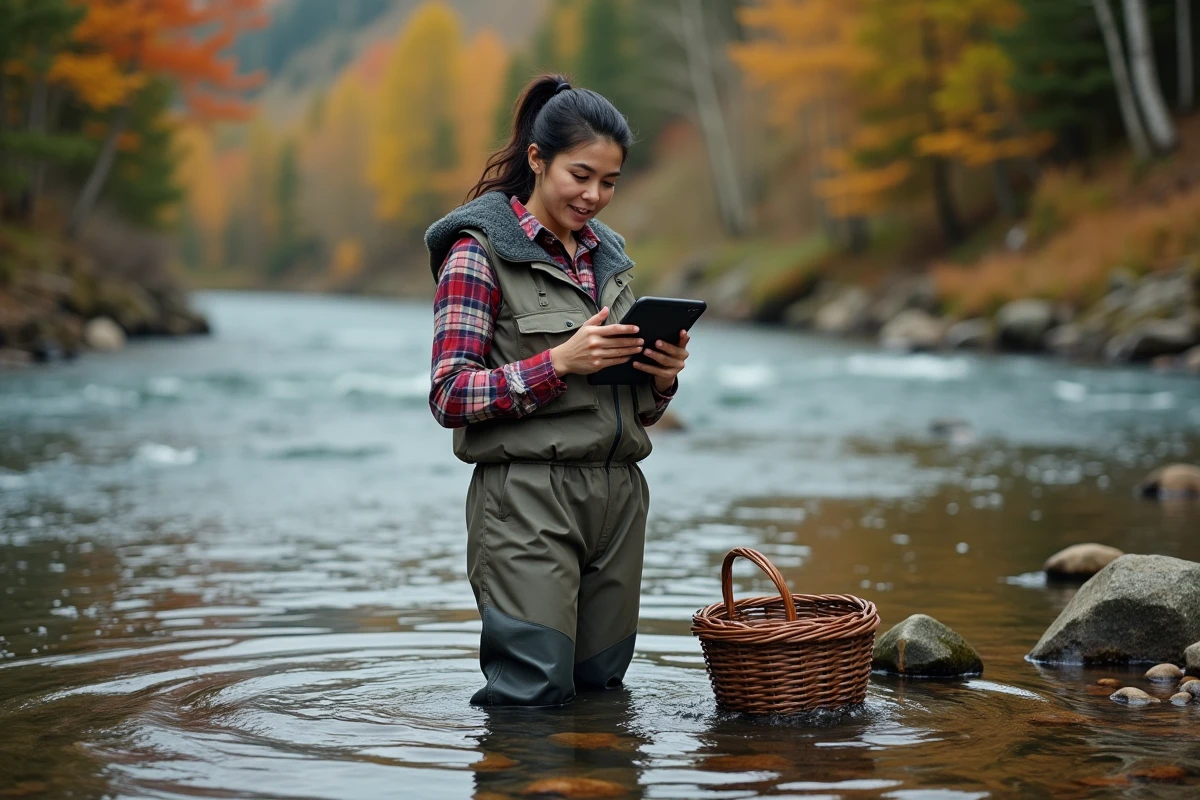
Tracking fishing outings with a dedicated app
A structured digital log transforms a simple collection of photos into a personal database. The goal is to be able, over the months, to cross-reference the conditions that produced good results: time, season, water temperature, lure or bait, depth.
Specialized apps (FishAngler, Fishing Grid, or platforms like My Fish Book) generally operate on the same principle. They offer an entry form per outing and aggregate the data into a consultable history. For those who wish to visit My Fish Book online, the platform combines a catch log with a community dimension and customizable sharing options.
The real interest of these tools appears after several dozen recorded sessions. An angler who systematically notes their outing conditions can identify patterns they would never have spotted otherwise: a type of spot that works at low tide, an effective lure color in stained water, a regularly productive time slot on a given watercourse.
Field data or map data: two complementary approaches
Some apps focus on field data (logbook, personal statistics, photos). Others rely on mapping, with river maps, seabeds, and bathymetric data.
The two uses do not replace each other. The map helps identify a new water body or understand the structure of a bottom. The logbook, on the other hand, captures what the map does not show: the behavior of fish that day, the technique that triggered the bites.
The fragmentation between mobile and tablet also plays a role. In the field, the phone screen is used to quickly log a catch. Once back home, a tablet or computer allows for analyzing statistics on a larger screen, comparing sessions, and exporting data.
Sharing fishing adventures without fueling overfishing of a spot
The article from peche.com on sharing spots reminds us of a fact that many anglers observe: the publication of a productive spot quickly attracts additional pressure. In some already heavily frequented spots, a single viral video can transform a quiet corner into a competitive location.
Online sharing is not binary. Between showing everything and saying nothing, several approaches exist:
- Publishing the catch with detailed technique (rig, animation, lure) but without location indication, which provides real educational value to the community
- Restricting dissemination to a private group of trusted anglers, with clear rules on non-rebroadcasting of locations
- Using a publication delay: sharing an outing several weeks later, when the temporal information (water level, temperature) is no longer directly exploitable by others
- Framing photos in such a way as to show no identifiable landscape elements (bridge, sign, building in the background)
This last precaution is often overlooked. A recognizable background betrays a spot as surely as a GPS coordinate.
The role of the chosen format for sharing
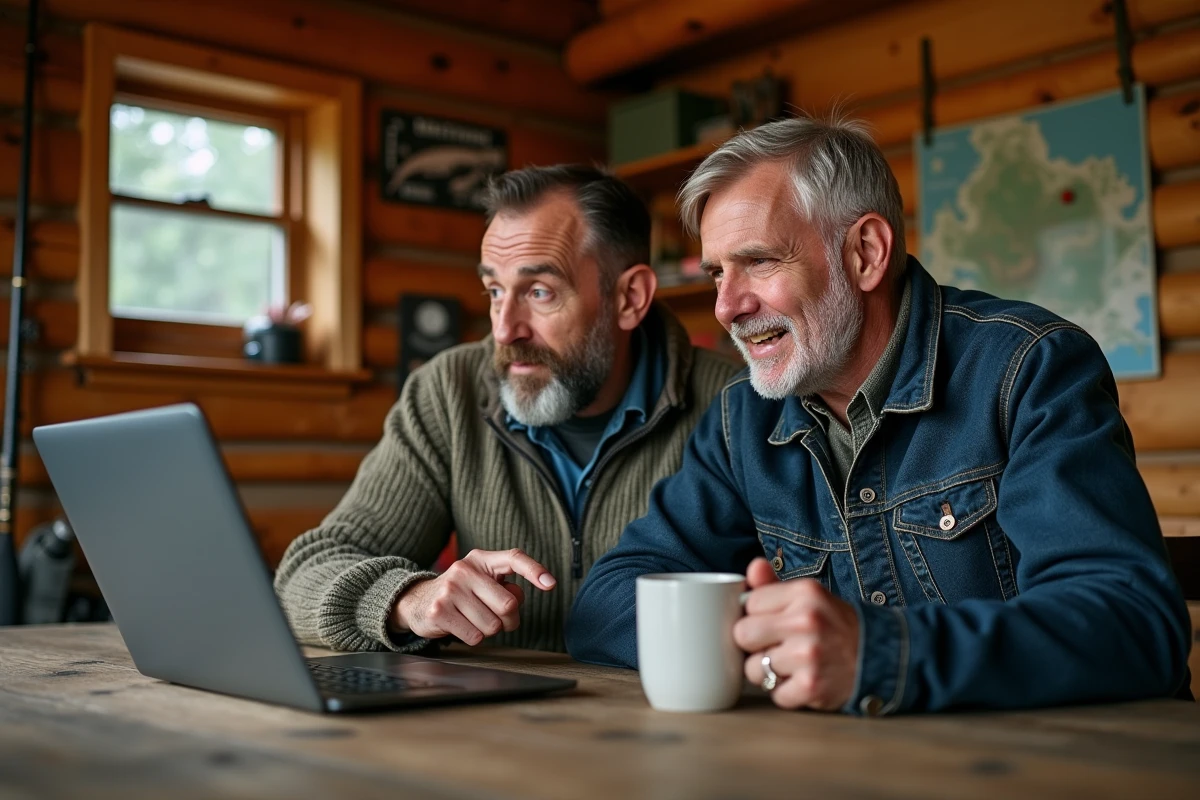
A post on a public social network reaches a broad and non-targeted audience. An article on a personal fishing blog attracts readers already engaged in the discipline. A message on a specialized forum addresses a restricted community.
The choice of channel determines the level of risk. The broader and more passive the audience, the higher the probability that a spot will be spotted by curious onlookers. Conversely, a targeted share among enthusiasts allows for exchanging useful feedback without uncontrolled dissemination.
Digital fishing log: choosing between free and premium features
The majority of fishing tracking apps operate on a freemium model. The free version covers basic entry (species, photo, date). Advanced features (detailed maps, data export, cross-referenced statistics, ad removal) are reserved for premium subscriptions.
Before paying, the question to ask concerns the actual usage. An occasional angler who goes out a dozen times a year probably does not need integrated bathymetric maps. A regular angler in rivers or at sea, who seeks to leverage their data over several seasons, will benefit more from a comprehensive tool.
The often underestimated criterion is data portability. If the app shuts down or changes its business model, the angler must be able to export their history. Platforms that offer CSV or PDF export of all sessions protect the investment in data entry time.
Tracking and sharing fishing outings online relies on a balance between openness and discretion. The tools exist for both, provided that each privacy parameter is configured before the first publication rather than after.